drums, organs, pianos,
harmonies that felt like
ghosts in the room.

Are the good times really over for good?
Do you ever get the sense that the good times are over?
I don’t mean to depress anyone.
And I could be wrong.
Merle Haggard asked us the same thing in 1981:
I wish coke was still cola
And a joint was a bad place to be
It was back before Nixon lied to us all on T.V
Before microwave ovens when a girl could still cook, and still would
Is the best of the free life behind us now
Are the good times really over for good?
Clearly it’s a generational question.
I think the odd thing about being a ‘millennial’ — not wishing to out myself, but I’m almost 37 now — is that we were probably the last people to grow up without a ‘device’.
I mean, we had devices of our own.
But I’m not sure Mario Tennis on a Game Boy Colour really stands up against the iPhone 18.
It feels wrong to call them ‘phones’, doesn’t it?
I don’t know what the thing I’m typing this into is at this point in human history, but it isn’t a phone.
I’m currently halfway through M. John Harrison’s novel ‘The End of Everything’, which follows two characters on the Kentish coast as they struggle to come to terms with a ‘post-crisis’ England.
The beauty of the novel is the way in which the nature of the ‘crisis’ remains permanently obscure.
Nobody seems to understand what happened, though they all know that something irrevocable has.
Odd, shape-shifting lifeforms wash up on the shore, follow people about, and echo their thoughts out loud.
Europe seems to have been ‘misplaced’.
There is a sense that strange new intelligences possessing technology we can’t begin to understand are reshaping the world, but nobody is really sure how or why.
I sometimes feel a little like I’m living at the end of everything.
Maybe it’s just a symptom of getting older.
It seems paradoxical, but I can’t help feeling that the world is becoming simultaneously more extraordinary and more banal.
In 15 minutes of mindless phone-checking I can be convinced my testosterone is dangerously low, hear the US President lay claim to Greenland, watch my modest cryptocurrency holdings tick up and down, have a debate with myself about Ed Sheeran’s stance on Gaza, talk to a large language model about existentialist philosophy, play chess against an abusive stranger halfway round the world, and feel my self-worth ebbing away as another piece of content is ignored by effectively the entire internet.
Any one of those things in isolation is enough to warrant a sizeable pause for thought.
Taken together, they seem to produce the same numb reaction as an impossibly large number.
I wonder whether the 21st-century brain is just in a state of semi-permanent informational whiplash.
It’s like the bigger my virtual landscape becomes, the smaller my tangible experience of life gets.
I have every cultural artefact in the history of human civilisation at my fingertips — from the Lascaux cave paintings to a pirate stream of Chris Nolan’s The Odyssey — and I’m too bored and desensitised to sit with any of them for more than 15 seconds.
Within an hour or two’s drive from my house I could be in a medieval cathedral, or an art gallery, or on top of a mountain, or gazing out across the Atlantic Ocean.
But what do I do?
I constantly check and recheck my phone, and scroll, and cook eggs and drink coffee and check and scroll and go to the gym and come back again and scroll and check.
And like the characters in M. John Harrison’s novel, I’m permeated by this strange sense of unease.
Like everything important is slowly slipping away somehow, like real life is happening somewhere else, somewhere on the other side of the screen, and all I can do is glimpse it through a mirror, dimly, and then wait for the feed to refresh.
Like all this checking and rechecking should be giving me a better handle on it - a clearer view - but it never does.
I probably need to get out more - but every time I do I’m struck by the same eerie sensation.
You go to a cafe, or a bar, or for a walk, and you gradually notice that everyone around you is hunched over their phone, escaping into a colourful hyper-simulation of the reality they’re already in.
And within seconds, before I even realise it, I find myself doing the same thing.
Maybe the other curse of the millennial generation is that we were raised by incurable optimists.
My parents are so lacking in self-doubt that it puts me to shame.
And why wouldn’t they be?
They slept on the empty beaches of Greek islands before there were all-inclusive hotels.
They had the Beatles and Bob Dylan in real time.
They had friendships unmediated by technology and raised families they loved in houses they could afford to buy with jobs that meant something to them.
Of course, I’m giving you the highlights.
They had their own fears and disappointments: Cold Wars, economic crashes, and, for most of their lives, only five channels on the TV.
But they also lived without being subtly reconditioned every day by sophisticated algorithms designed to whisper to their subconscious that they weren’t quite good enough yet.
And even they aren’t immune.
I love spending time with my parents and my brother.
We see each other, have a drink and talk and laugh.
But often, later on in the evening, when the excitement has waned a little and we're sat around the living room in various comfortable chairs, I’ll suddenly wake up as if from a strange dream I can’t quite remember and find that we’ve all disappeared into our devices and that everyone is checking, and scrolling, and silent.
Together, and apart.
And I don’t know whether the good times are really over for good.
But I suspect I’m missing quite a few of them.
Anyway.
If you’re reading this with someone you love sitting next to you, you have my full permission to stop.
I’ll try to do the same.
Keep dreaming,
Rob
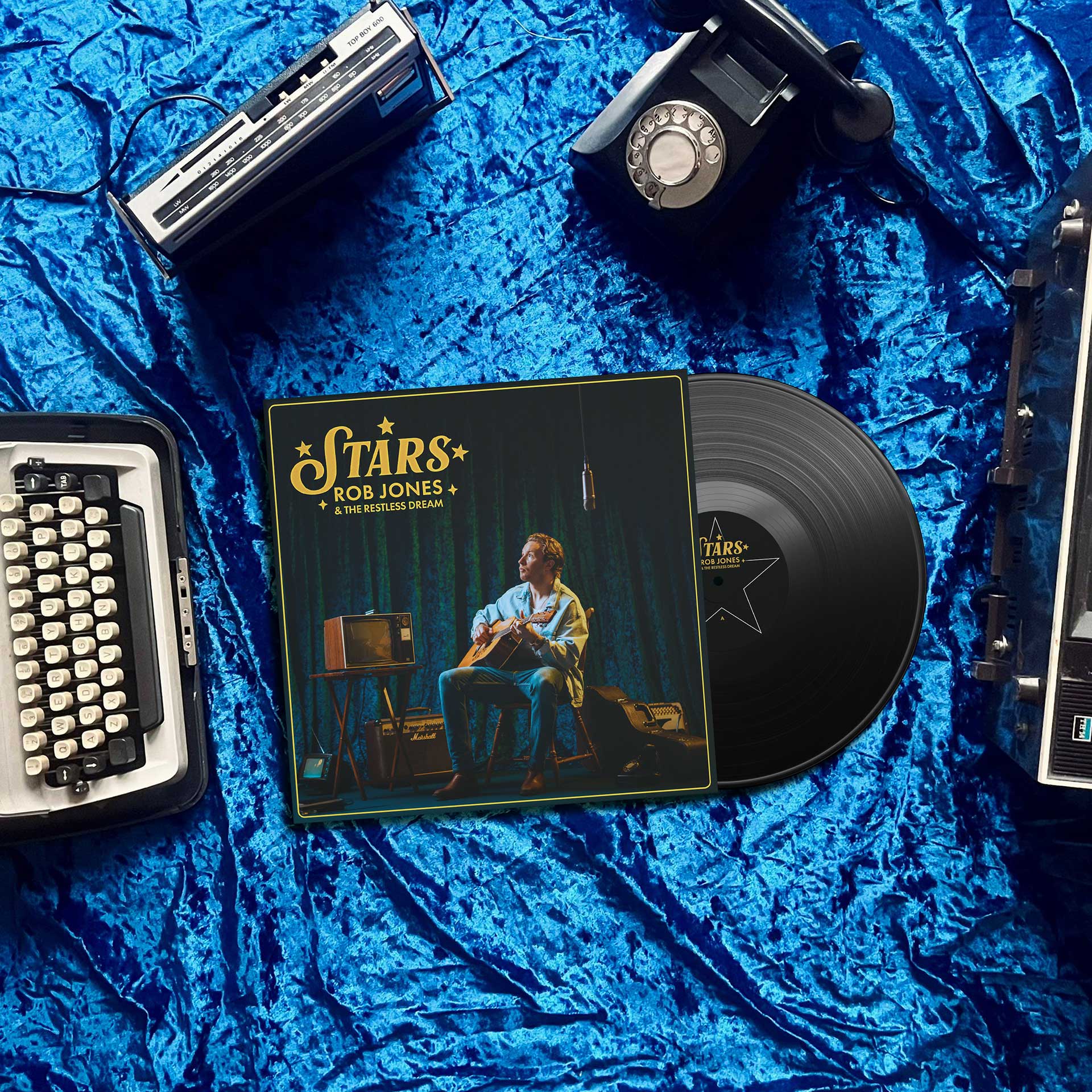
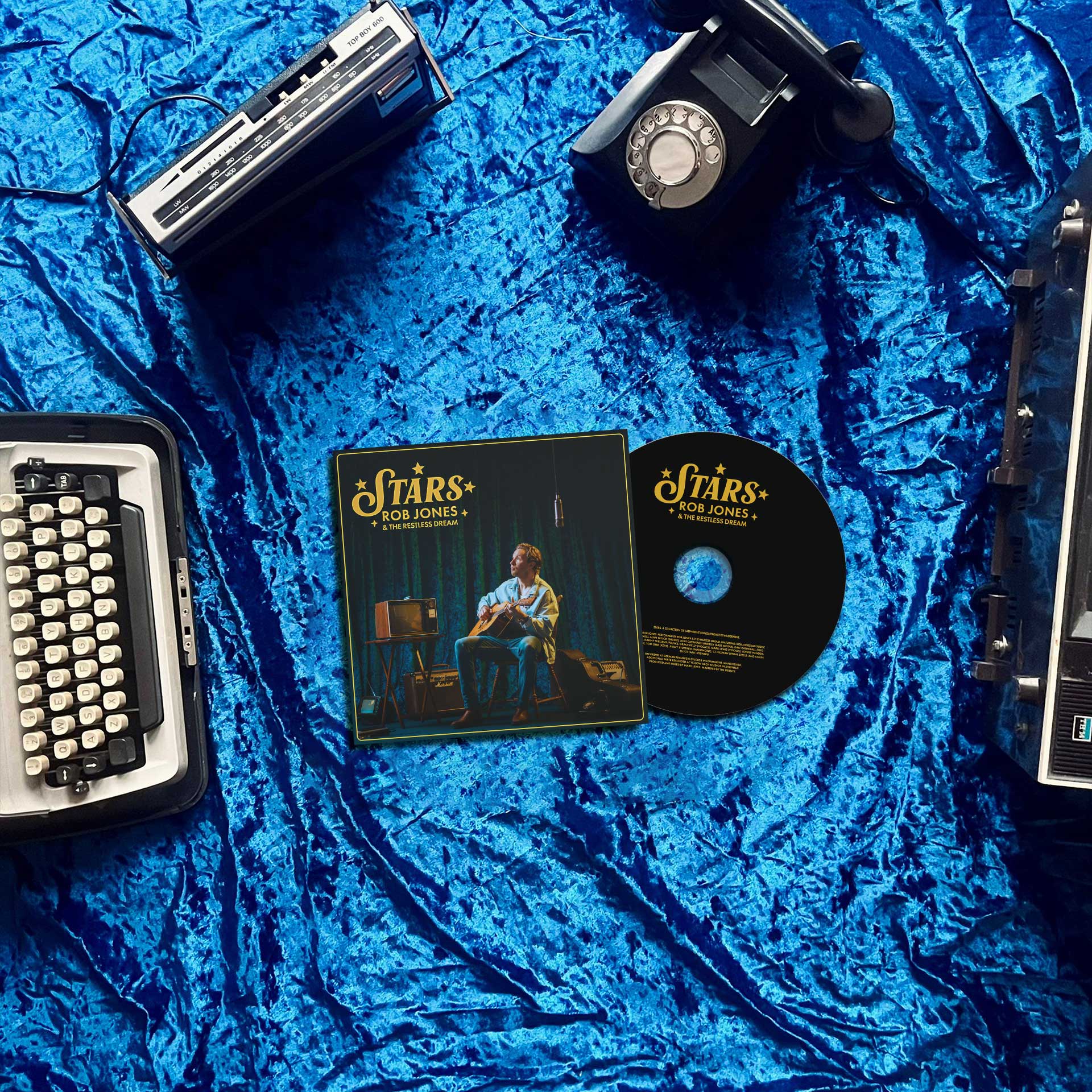
Available to buy on limited edition first run vinyl and CD