drums, organs, pianos,
harmonies that felt like
ghosts in the room.
Notes on musical limbo...
Listen.
I know what you’re thinking.
A month without an email? Nothing new on social media for weeks? No more talk of this mysterious ‘album’ we thought he'd never shut up about?
What has happened to Rob Jones and his Restless Dream?
Of course, you aren’t thinking any of that. You’re busy with far more important things.
Luckily, I’ve been obsessing over these questions enough for both of us.
Because the truth is, I’ve been trapped in a strange sort of limbo.
Let me explain...
We wrapped Stars—this album I used to talk about a lot—back in early summer last year.
I even put on a special show to launch it. A few of you were probably there and have the CD to prove it.
The problem? There wasn’t really anything to ‘launch’.
You see, I'd thoroughly underestimated what it takes to self-release an album.
Because I’d poured so much time, money, and energy into making the music, I got a little overexcited once it was finished.
I felt like my work was done. I’d made a great record. People were going to love it. Feet up.
But, of course, making the music is only half the battle.
Potentially less than half, it turns out.
Suddenly it dawned on me—I wasn’t ready to release an album at all.
I had a vague idea of what it might look like, but I hadn’t executed the artwork or really pinned down the visuals.
And if I didn’t have that—the centrepiece of the whole project—how could I start getting video content, or photography, or social media stuff together to promote it?
I needed an aesthetic, a style.
And that wasn't all—you can’t just drop an album all in one go, unless you mean for it to decompose silently in the elephant’s graveyard of Spotify.
You drip-feed singles. Promote them. Build some anticipation.
Which meant I needed to decide what they were.
And in what order I wanted to release them.
And I needed artwork for each one—artwork that tied back to the album cover I still didn’t have.
Most importantly: I needed a story.
Every great album has one.
Blood on the Tracks - messy divorce. Hotel California - the decadence of late '70's Los Angeles. Rumours - coke, lots of intra-band affairs, more coke.
I didn’t really know what my story was. Or how to tell it.
And then it hit me: I didn’t really know who I was as an ‘artist’ at all.
(And yes, that term still makes me die inside.)
I could hear it in the music, but I had no idea how to see it. How to crystallise it, colour-code it, communicate it.
Or who might help me.
I'd need people—camera operators, graphic designers, publicity firms, radio pluggers, video editors.
But I couldn’t recruit them. Because I had no instructions to give them.
So, as you can probably tell, it’s been frustrating six months.
I’ve had to go back to basics, ask myself some tough questions, and start from the ground up.
And that isn’t necessarily something you want to do.
Procrastination comes from the Latin pro ("forward") and crastinus ("of tomorrow").
And tomorrow is a seductive idea when today involves trying to sit down and figure out who you are.
If your brain is anything like mine, it’s a constant warzone.
On one side: the prefrontal cortex, the responsible, logical problem solver.
On the other: the limbic system, the comfort-seeking, emotionally fragile slacker.
Like sitcom roommates, they bicker incessantly.
And I’m afraid the limbic system generally wins.
If you're the same, don't feel too bad about it: some of history’s most productive people were also legendary procrastinators.
Leonardo da Vinci took 16 years to finish the Mona Lisa.
Victor Hugo had to torture himself to finish The Hunchback of Notre Dame—locking away all his clothes in a chest and giving the key to his wife so he couldn’t leave his freezing apartment until it was done.
Douglas Adams had to be physically imprisoned in a hotel room for three months by his editor to finish So Long, and Thanks for All the Fish.
Even Cicero, the ancient Roman orator, cursed his own tendency to procrastinate, calling it "the thief of time."
But now that I’ve stopped beating myself up about it, I actually suspect there might have been some value in my procrastination.
Or, more accurately: maybe I've realised that, sometimes, you just aren’t quite ready to do something until you’re ready to do it.
Because the sun is shining now, and everything feels a lot more manageable.
I’ve finally shaken off the winter viruses that have been ravaging me (and everyone else I know) since November.
I’ve had a couple of insights. Read a few interesting things. Had some inspiring conversations.
And it’s not like I’ve really been doing nothing for six months.
The brain doesn’t work like that.
Quietly, inevitably, ideas have been percolating, simmering.
And now, I think they’re taking shape.
Which is either down to good luck or necessity or both, because I can’t delay any longer.
I can’t miss another summer.
Touch wood—I think I may have found some answers.
More importantly, I now feel open enough to hear them.
And that just wasn’t the case until recently.
So maybe I need to rethink procrastination a little.
Maybe it isn’t just laziness.
Maybe, sometimes, it’s a sort of intuition—my subconscious telling me I’m just not quite ready for action yet.
After all, I don’t have any real reason to think I’m an inherently lazy person.
Just one with a penchant for self-criticism.
It’d be nice to internalise that lesson, but I doubt I will. We are who we are, after all.
Maybe if I’d made peace with it earlier, I could have enjoyed my limbo period a little more.
As Bertrand Russell put it:
"Time you enjoy wasting is not wasted time."
Maybe next time I find myself in limbo I need to get a bit more European about life, and ditch the Protestant guilt.
Indulge in a little la dolce far niente—what the Italians call "the joy of doing nothing."
Now, though, it's time to set some wheels in motion.
Thank you for sticking around.
Keep dreaming,
Rob
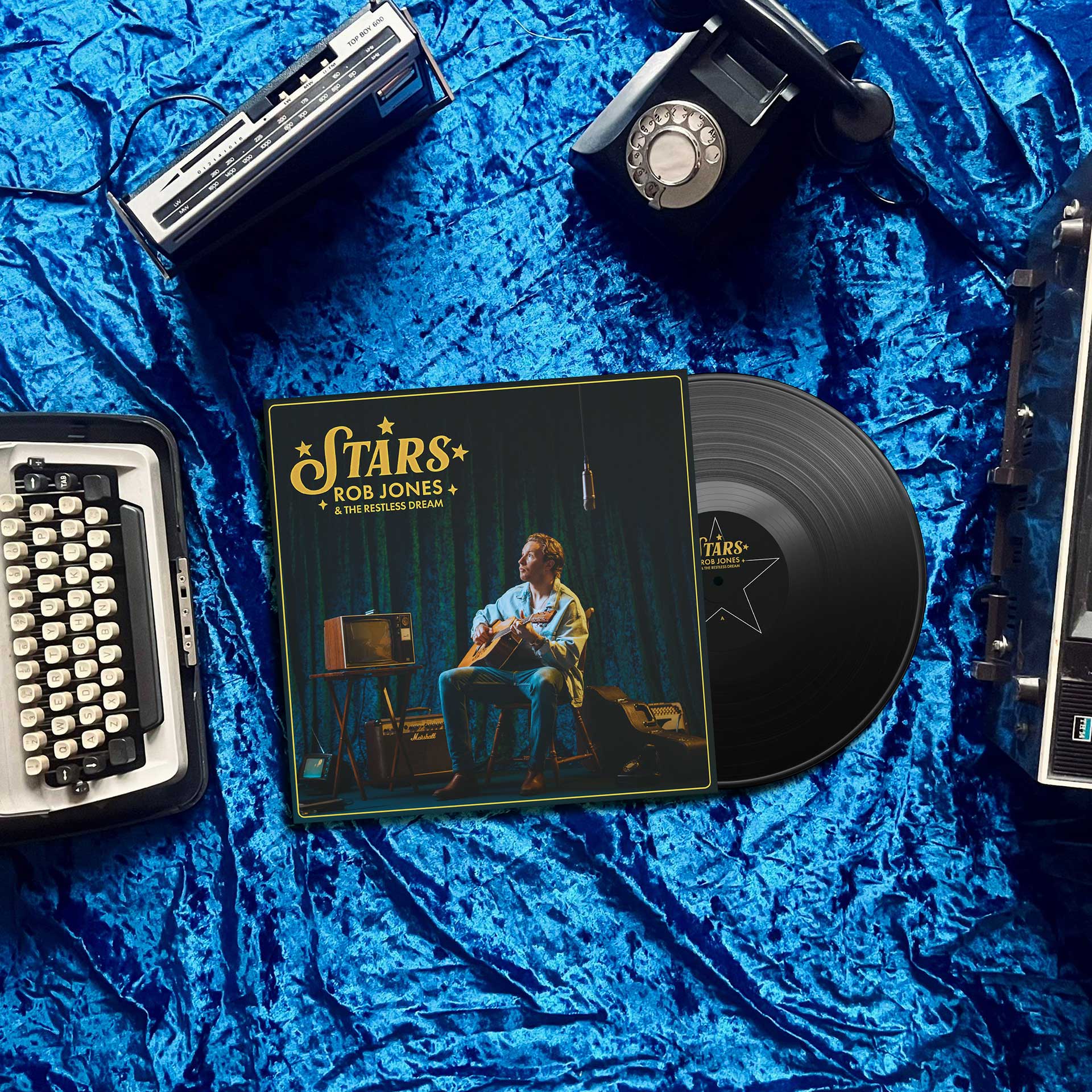
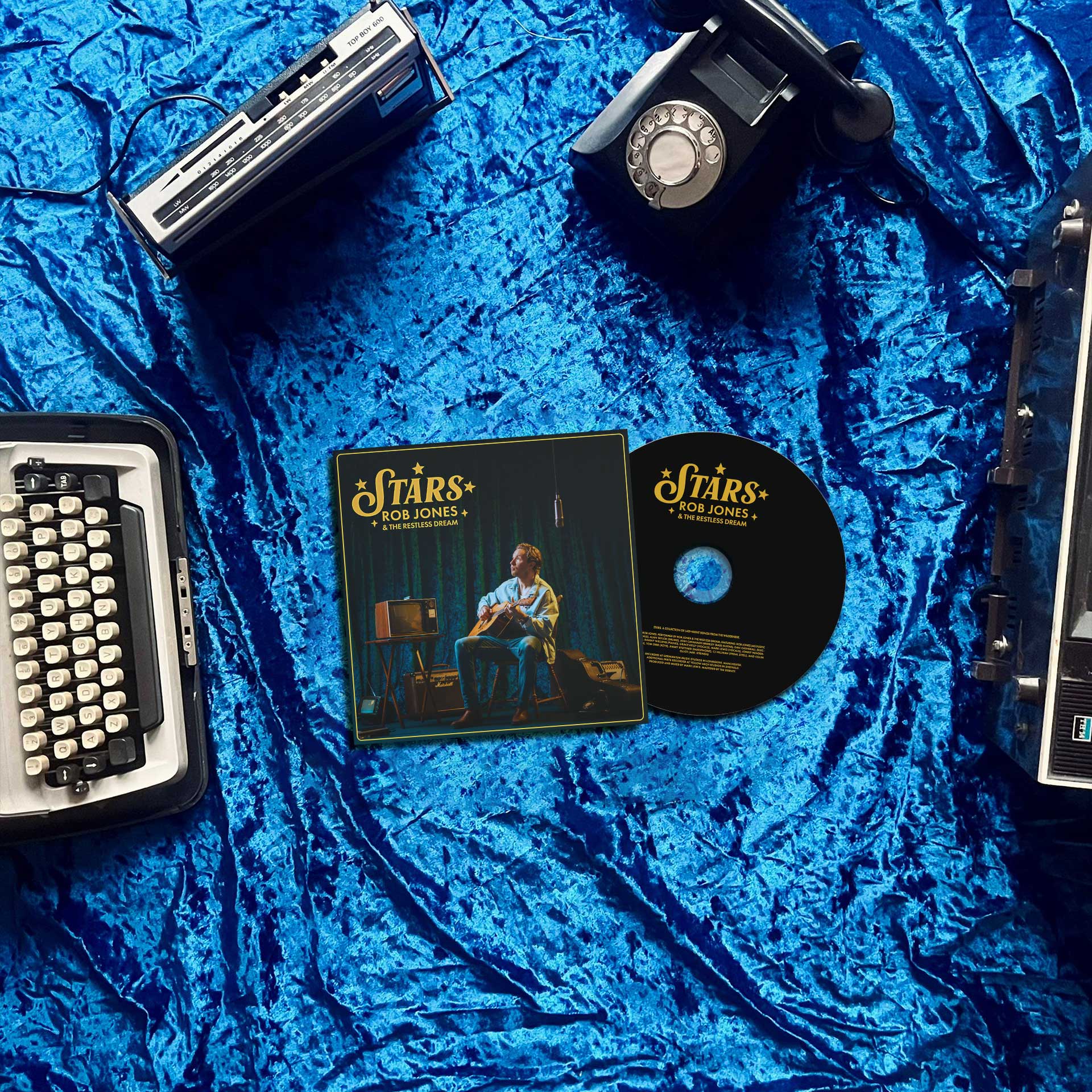
Available to buy on limited edition first run vinyl and CD