drums, organs, pianos,
harmonies that felt like
ghosts in the room.
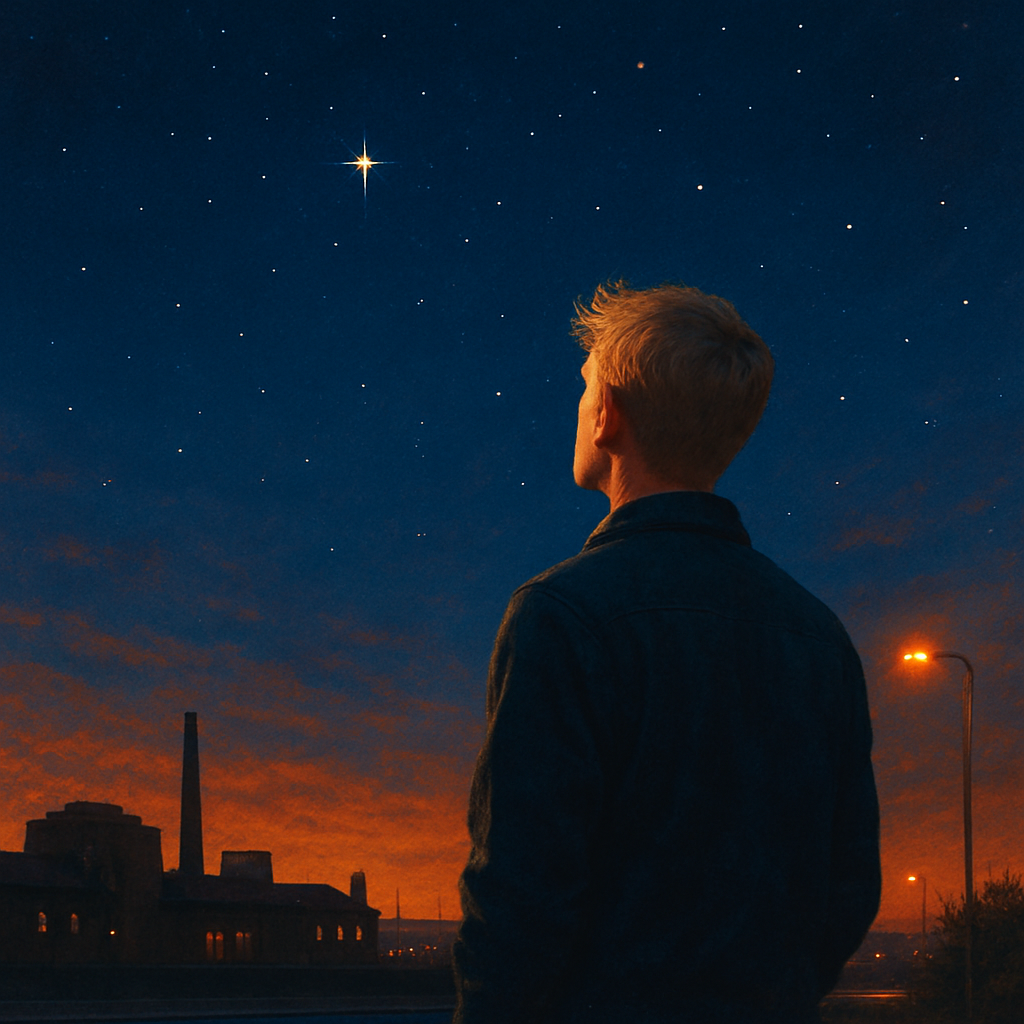
Polaris and The Lighthouse 🌩️ 🌟
“To reach a port, we must sail—sail, not tie at anchor—sail, not drift.” - Franklin D. Roosevelt
The ancient Alexandrians created the world’s first artificial star.
Inside their Great Library they embarked on a quest to gather the world’s knowledge — amassing hundreds of thousands of scrolls that came to embody the sum total of earthly philosophy, mathematics, science and poetry.
Not only that, their astronomers — men like Eratosthenes, Hipparchus and Ptolemy — were busy mapping the heavens into a system that seafarers would use for the next 1,400 years.
On the island of Pharos they distilled that knowledge into a physical monument that became one of the seven wonders of the ancient world: the Lighthouse of Alexandria.
The fire at its summit, reflected thirty miles out to sea on the clearest nights by a mirror of polished bronze, became a symbol of the human capacity not only to hear the music of the stars, but to broadcast it back out into the darkness.
For nearly sixteen hundred years it blazed, guiding ships safely into its harbour.
The beginning of my own quest wasn’t nearly as grand.
Jobless, single, and approaching my mid-thirties, I was in real need of some direction.
The world is a confusing place.
There’s something about casting off society’s expectations that is liberating and terrifying in equal measure.
For the first few months I felt like a man unleashed.
I was hard at work taking any gig I could find just to keep myself afloat.
I’d play in drizzly suburban gardens at ambitious September barbecues; crowded house parties and empty pubs; weddings, funerals, restaurants — anywhere that would have me.
I became a strange day-walker: emerging pale and hoarse in the early afternoon to wander the aisles of the supermarket, shake off the mild hangover and gear myself up to do it all again.
The North Star has long been a symbol of constancy.
We’re all vaguely aware of its role as a navigational tool — a star that sits at roughly true north, close enough to the horizon that measuring its height would allow a ship’s navigator to calculate his latitude.
It’s the centre that doesn’t move, in a world that always does.
But actually, thanks to the wobbly journey our planet takes through its solar orbit, this isn’t the case.
The ancient Greeks had no bright pole star to depend on.
By 500 CE, around the time the Western Roman Empire was beginning to crumble, Polaris was still noticeably off-centre.
Sometimes clarity and direction take a while to emerge.
My own was still beginning to take shape.
Not satisfied any more with other people’s songs, I’d started to write some of my own.
I’d nervously strum through them at open mic nights — hoping desperately that someone would seek me out at the end and tell me I was the next Bob Dylan.
I quickly learned to lower my expectations.
I was also gathering a band.
Bruce Springsteen often describes the E Street Band as the best bar band in the world.
My own restless dream became to create my own version and, luckily, having played in bar bands since I was sixteen, I had a galaxy of Manchester’s weirdest, most talented musicians to choose from.
They were sympathetic at first — happy to help out — a strange bundle of brains and hands that seemed to be able to take those simple chords and lyrics of mine and somehow transform them into other things — versions of them I’d never heard but would instantly fall in love with.
I like to think they take me a little more seriously now, but I’m not sure they ever will.
Trying to transform into someone else before the eyes of friends who have known you for a decade always makes for a slow and awkward costume change.
Other people found it even more confusing.
‘What — so you’re not teaching at all now?’
No.
‘It’s just tough isn’t it. There’s so many talented people out there but so few of them ever make it.’
Yep.
And, of course, the ubiquitous:
‘Ah well — you know what, fair play to you. At least you’re doing something you love.’
I’m still not sure what ‘making it’ means but I think that’s becoming clearer.
By the early medieval period, Polaris had finally settled somewhere near enough to true north to allow the first ocean-going ships to depend on it through lulls, storms and cannon-fire.
But, in fact, it still hasn’t arrived.
And it won’t pass through true north until the turn of the next century, after which it’ll continue its own dark voyage through the black, charting a course across the heavens.
I realised that I needed my own pole star — something to sail towards through this strange twilight life I’d found myself in.
I needed an album.
Something more than the fragmentary singles and EPs I’d been releasing.
Something with form, sequence, and a story.
A constellation of my own.
Keep dreaming,
Rob
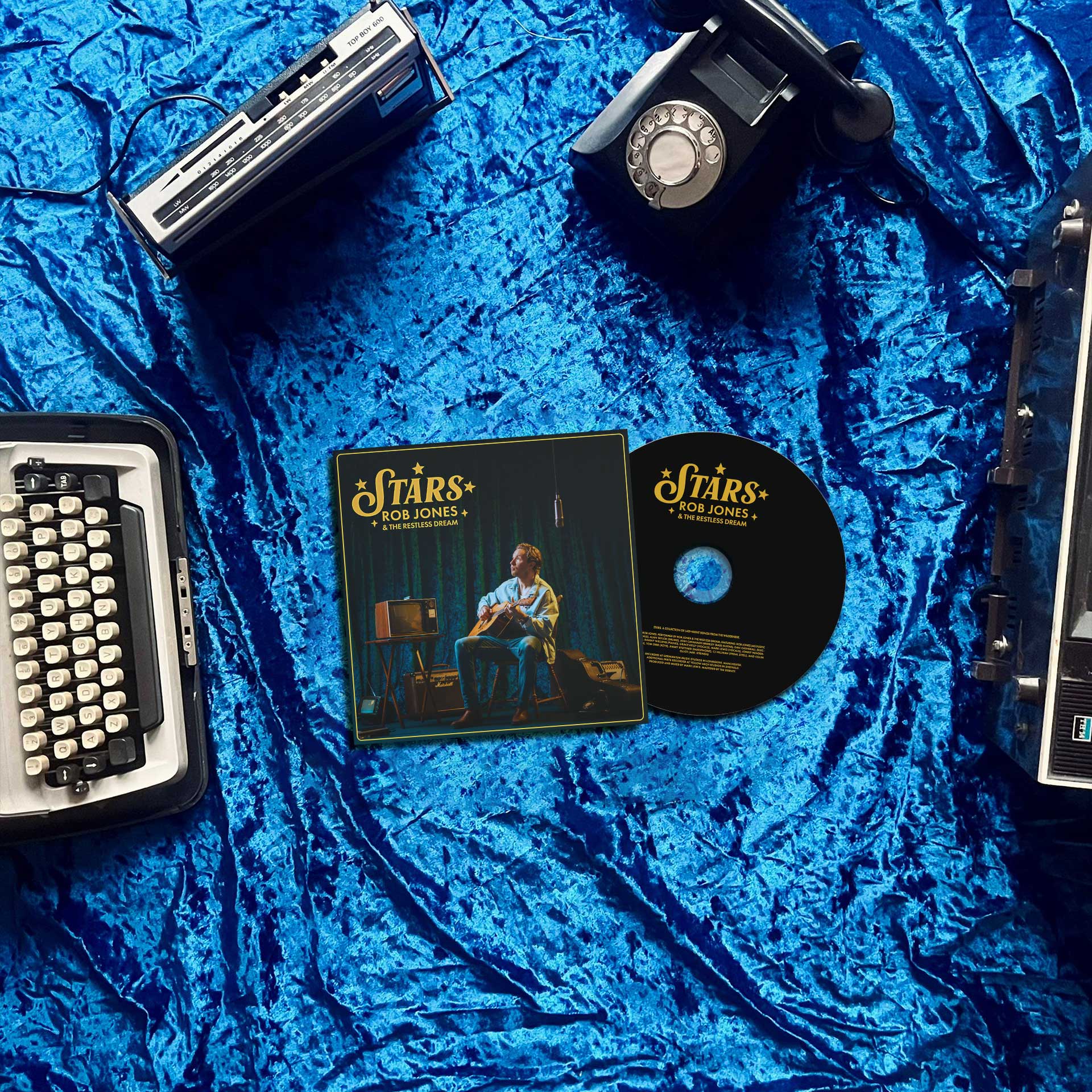
Available to buy on limited edition first run vinyl and CD