drums, organs, pianos,
harmonies that felt like
ghosts in the room.
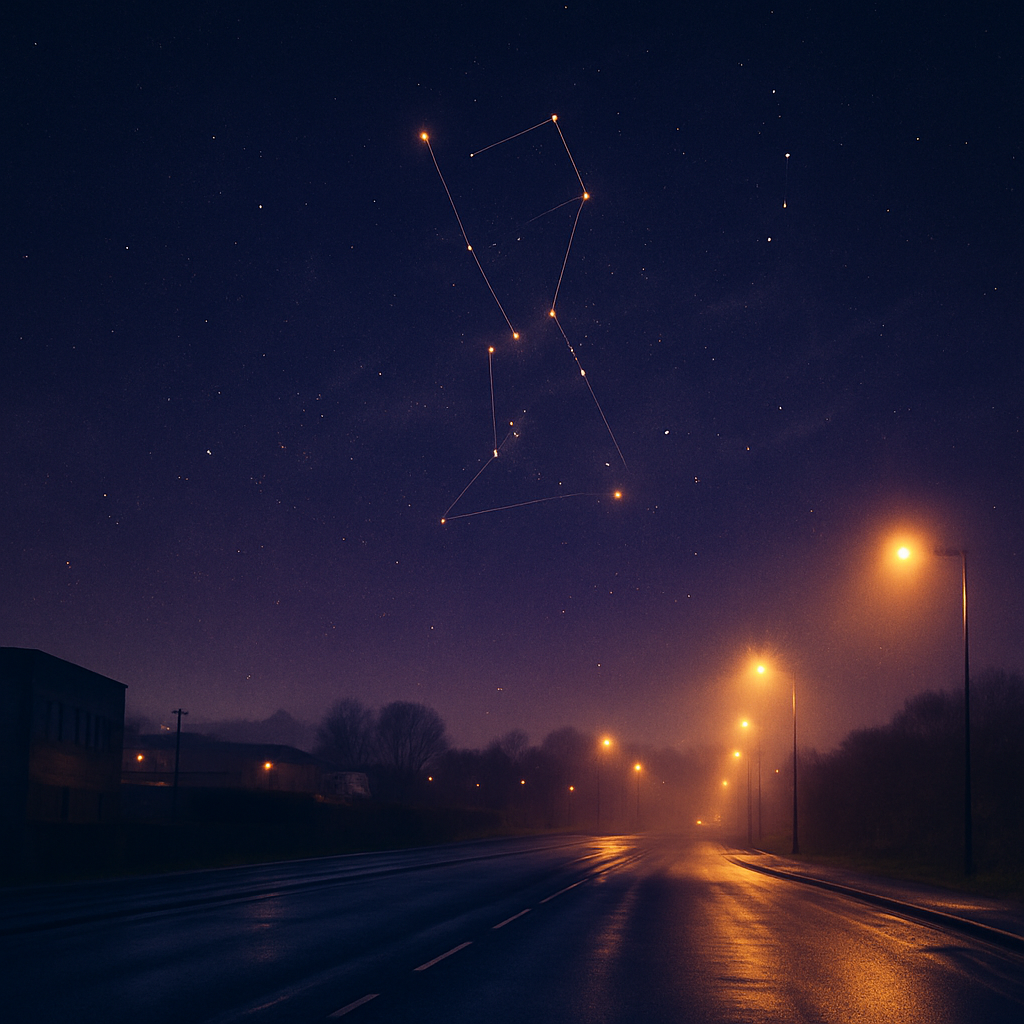
Orion, Astrology and Personal Crisis 📡 ✨
“Man is a creature of a small hour in a great night.”
— G.K. Chesterton
I don’t see the stars much these days.
Manchester is usually a grey blanket of cloud, like it is this evening.
And even on clearer nights, the A-road and the airport and the houses spill their light upwards in a dim, yellow fog.
I sometimes wonder what this absence does to the human psyche.
For most of human history, the night sky has been both a map and a mirror.
For millennia, we humans wandered beneath an endless galaxy of stars. And every night we could gaze upwards and make contact with the sublime.
We evolved with the stars. They helped us navigate the oceans, position our pyramids, and track the cycles of the months and years.
They were also our messengers, omens, signifiers — strange reflections of our deepest mythologies.
Of course, this was long before we really knew what we were looking at.
But we often intuit a thing’s importance before we understand it; we’re deeply instinctive creatures. Our rationality is always having to catch up with our reflexes.
I remember the moment about five years ago when it really dawned on me that I hadn’t been looking upwards for years.
In March 2020, I was walking out of a BTEC Media Studies lesson I’d just attempted — and almost entirely failed — to teach.
The usual teacher had gone off on long-term sick and I — having just been appointed as a ‘Specialist Leader in Education for English’ — was the only person with enough space in my luxurious timetable to pick the class up.
Media Studies (a term I can’t help hearing in air quotes) is a subject kids here in Britain can take at school when they’re about fifteen as part of their national qualifications.
In theory, it involves exploring the conventions of the media — TV archetypes, Hollywood camera angles, magazine typography — and is generally a friendly course for less academic kids that gives them scope to make their own posters and short films and get to grips with various bits of software.
In reality, it involves twenty-five of the school’s most difficult teenagers jumping at the chance to pick a subject that allows them to spend most lessons barely supervised on a computer.
That particular session had been the usual cocktail of laughing, screaming, seat-swapping and password-forgetting that had culminated in a girl called Izzy telling me to fuck off.
And that's when it happened.
As I walked back down the corridor to lunch I remember the world suddenly seeming to close in around me.
My internal monologue broke, and my head was filled with a sort of paralysed silence.
I stopped in the middle of the hallway in a prickly sweat as a torrent of hungry kids rushed past.
Was this it? I thought.
Was this going to be my life?
My actual life — not just a shadowy dress rehearsal that I could tidy up the second time around?
I’d been teaching around Manchester for about six years by then, and I'd had plenty of trainwreck lessons along the way — being told to fuck off was nothing I hadn’t heard before.
I’d managed to stumble my way upwards as a teacher by being fairly engaging at the front of the class and having a shiny degree from Oxford.
I’d breezed through the various pit stops of a successful career in no time — I qualified, became a second in department, a head of department — and now I found myself in the cushiest teaching job I could possibly imagine.
But at that moment, I felt completely helpless.
Astrology hinges on the belief that the positioning of the stars can predict the fates of human beings.
William Lilly was England’s first great astrologer — though sceptics would probably regard him more like a savvy political weathervane with a poet’s sense of timing.
He adapted the classical horary systems used by Ptolemy and the other ancients and combined them with what he’d learned from various medieval and Arabic manuals to produce star charts that could answer any question about the future.
In doing so, he was able to predict future events — the execution of Charles I, the victory of Cromwell’s New Model Army, even the year of his own death — with an uncanny degree of success.
He was famously interrogated by Parliament following the Great Fire of London in 1666, having foretold it with such prescience that they understandably began to suspect he may have started it.
I’ve never believed in astrology — though I do have a great respect for horoscope writers; tabloid sages with the ability to churn out neat little sentences that can sound uniquiely personal to almost anyone who happens to read them.
In that moment, though, I think I felt what it was like to be tethered to the wheel of fate; lost in a life that I had no control over.
And worse still: I couldn’t even blame it on the stars.
It was a life that I’d blindly chosen to construct for myself.
So far, so dramatic.
What was even more dramatic, though, was that about three weeks later the entire world came to a shuddering halt.
One of Lilly’s other most famous astrological predictions was that London would be ravaged by pestilence — as he put it, a “disease of the river.”
I would doubtless have been sceptical then — just as I was a few Fridays later, standing in front of the same Media Studies class (we’d reached a bit more of a mutual understanding by then), telling them that weird types of flu happened all the time in Asia, that school would not be closed and that, yes, they would all definitely have to finish their projects.
By Monday, after a weekend playing with my band in a series of crowded, poorly ventilated pubs, I was running a fever of nearly thirty-nine degrees, as was, seemingly, the entire population of Italy.
I never saw that Media Studies class again.
By the time schools reopened properly, they’d all grown up and left.
I can’t imagine they missed me all that much.
Shortly after them, in the spring of 2022, I handed in my notice and left too — determined not to live my life by someone's else's timetable again.
Determined to step out into the dark, look up at the sky and see what else there was to find.
The ancient Greco-Romans not only read messages in the stars but inscribed the heavens with their own stories and characters.
Orion, the boastful hunter, eternally pursued by Scorpius — the tiny, fateful scorpion that killed him.
Or Ursa Major and Minor — the beautiful mother and her son, turned into bears by Hera, Zeus’s jealous wife.
As I say — the night sky is both a map and a mirror.
We project our wildest dreams out into the stars, just as vividly as we read our future between the lines of a horoscope.
And that’s how this odd journey all began, really.
Little did I know then that stepping out into the night could be quite so strange and disorienting, even with the stars to guide me.
But I’ll tell you more about that next time.
For now…
Keep dreaming,
Rob
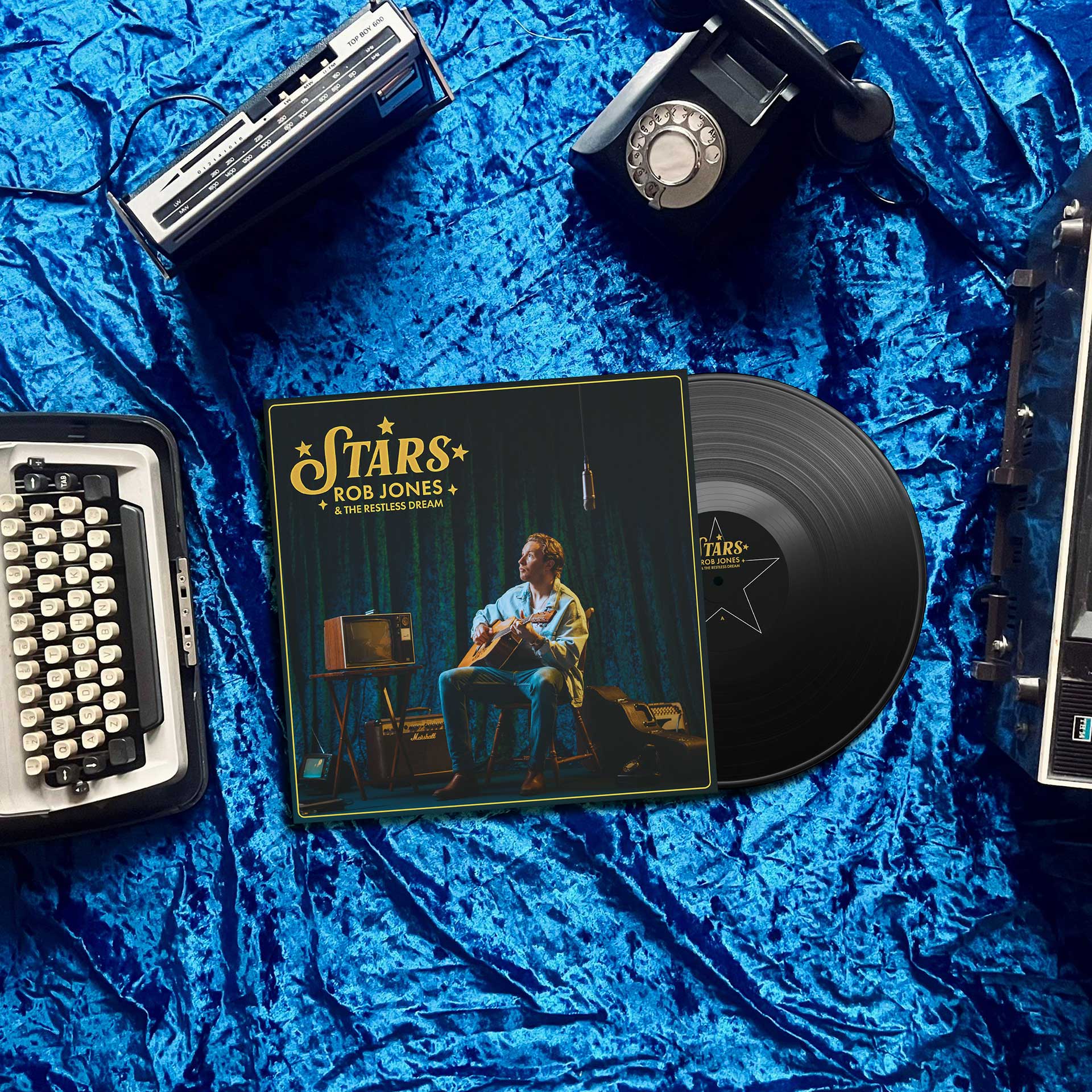
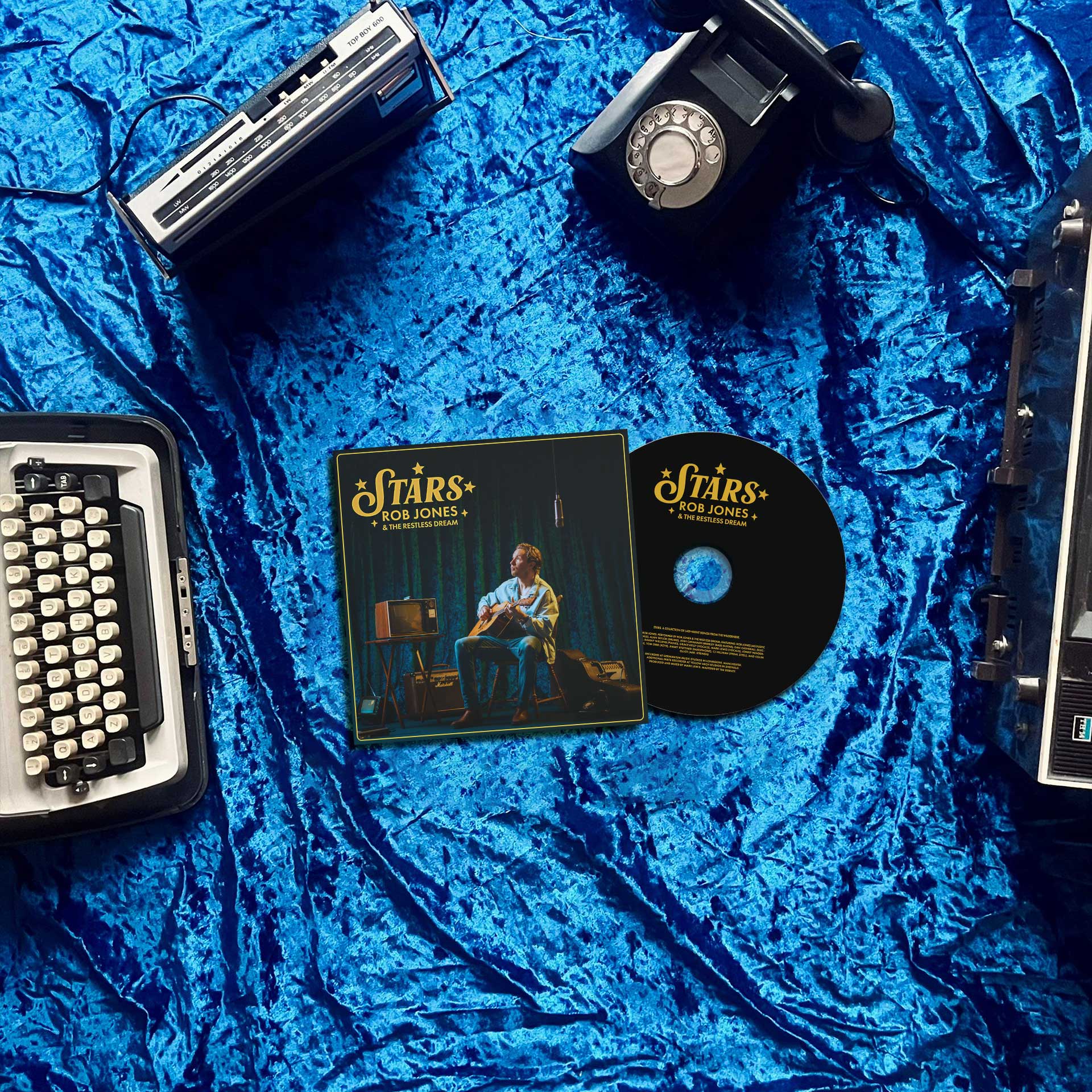
Available to buy on limited edition first run vinyl and CD