drums, organs, pianos,
harmonies that felt like
ghosts in the room.
Thoughts on a dying internet...
Have you ever heard of the ‘Dead Internet’ theory?
It’s a term that germinated in the early 2020s on some forum somewhere and seemed to capture an uneasy feeling.
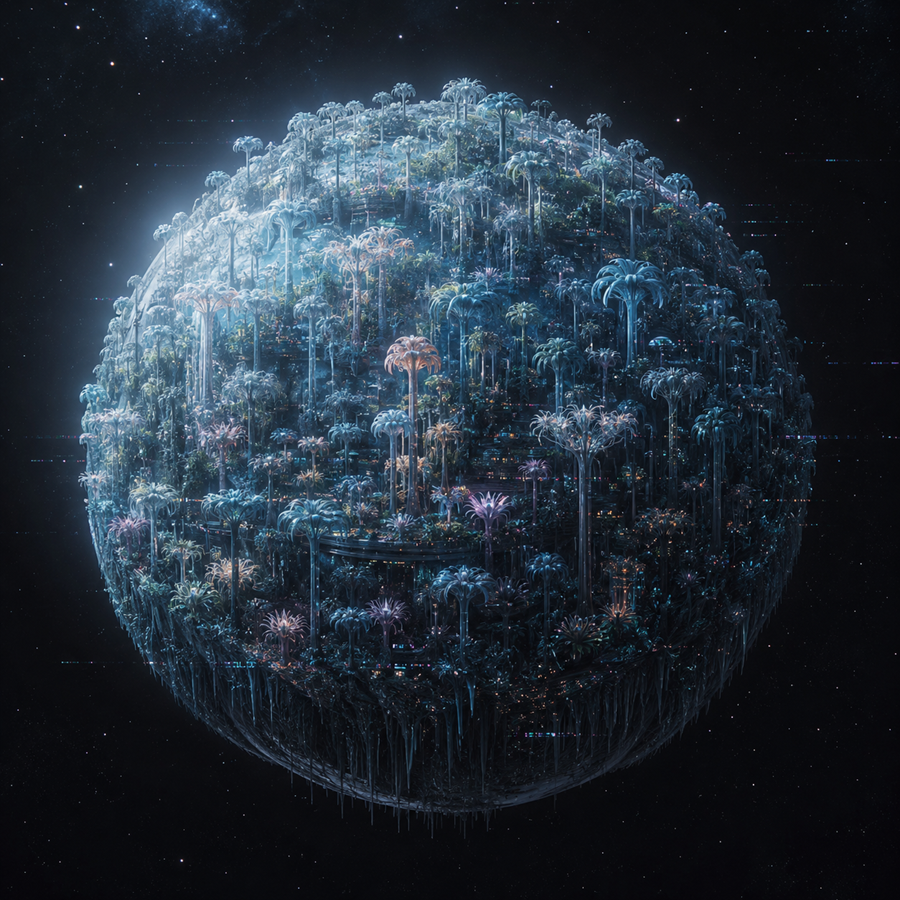
Imagine wandering through a labyrinthine forest.
You spend days turning one corner after another, feeling the damp soil beneath your feet, hearing branches snap and inhaling the thick perfumed air of the flowers.
You run your fingers across wizened bark and they come back covered in sap.
The sun breaks through the canopy in golden shafts, dancing with specks of pollen.
Then, at some point on your journey, you notice that the forest is beginning to change.
You see, I can remember the earliest days of the World Wide Web.
In fact, I can even remember life before it.
I remember watching a news piece about the internet back in the mid-nineties — before it had found its way into our house — and telling my parents over the dinner table:
‘You know, on “the internet”, there’s a website you can go to and they’ve set up this webcam, and you can see exactly what’s happening right now on London Bridge. On the computer!’
I also remember my mum looking blankly back at me and asking what now feels like a very poignant question:
‘Why would we want to do that?’
I remember our first modem, how it would click and whirr and how it felt like I was making first contact with an alien world.
Web pages would load an inch at a time, slowly crystallising into intelligible patterns like a game of Tetris.
I remember how my dad would track down the one spare computer in any hotel lobby in the world and dutifully tour the same collection of websites like a postman on his rounds: his emails, the Bolton Wanderers official website, the BBC News homepage, the Bob Dylan fan site.
The internet was a strange place back then.
It was a new frontier, being explored and populated.
An alternative reality, exploding into life in every conceivable direction.
A dense, new forest you could wander through for hours.
But it doesn’t feel like that anymore.
It feels like the forest has become something else.
Fibreglass trees, dry and cold to the touch. Shallow, plastic root systems that barely keep them tethered.
No flowery perfume or warm sunlight, just stale conditioned air sighing through polyester leaves.
Above all, the eerie feeling that every corner you turn leads to the same clearing as the last.
That it isn’t growing organically, but artificially regenerating itself in real time in order to keep you wandering for hours without ever really arriving anywhere.
The ‘Dead Internet’ theory is a prediction that, before too long, there will be almost no human-generated content left on the internet.
Or, to state it more accurately, that there will be such an overwhelming amount of artificial content that there might as well not be.
And I’m beginning to feel it.
What triggered these thoughts in me this week was an Instagram post I saw.
I probably shouldn’t ever go on Instagram.
Every time I open the app it feels like I’m glimpsing into a sort of Pandora’s box — still shut, but with a Perspex lid, so I can watch all the world’s most loathsome qualities wriggling and writhing about just beyond my own ghostly reflection.
Still, there I was.
It was a musician friend of mine reposting a glowing review of a song they’d just released.
Which is fine, except that the review had that strange synthetic quality to it that only ever means one thing now.
-----------------
The kind of writing that sounds technically correct but somehow completely weightless.
Every sentence perfectly formed.
Every adjective exactly where you’d expect it to be.
No awkwardness. No specificity. No sense that an actual human being sat down and felt compelled to say something strange or true or embarrassing.
Just this smooth, endlessly agreeable tone that seems designed to offend nobody and impress everybody.
Like content written by a very intelligent fridge.
-----------------
If you’re still wondering what I’m talking about, you’ve just experienced it.
The italicised section above was written by ChatGPT in about four seconds.
When I read the review, I suddenly had this uncomfortable vision of a world in which AI programs produce synthetic music, AI reviewers churn out thousands and thousands of glowing words and reaction videos, and AI bots stream it infinite times across Spotify and Amazon Music, triggering algorithms that then pump it like pleasant-sounding sewage into our ears.
The self-perpetuating carbon cycle of the Forest of Nothing.
And this goes way beyond music.
We’re already at the point where it’s becoming impossible to believe that anything we see or hear online is produced by an actual person.
Every product advertised to me on social media now comes with its own AI-generated video and a raft of reviews that sound just the wrong side of uncanny.
Every clickbait article I fall for has that ChatGPT cadence that tells me it wasn’t written so much as summoned from the neural network.
And so does every inflammatory comment beneath it.
Even the American President is posting artificially generated images of himself as Jesus.
(OK — it was easier not to be fooled by that one.)
The point is that the internet no longer feels like a place for human beings.
Rather than a second world we used to design, inhabit and shape, it increasingly feels like a strange simulacrum of reality, self-perpetuating, that we just sit passively on the sofa and watch through our phones.
It’d be nice to think we could just cordon it off and forget about it.
Accept that it has become an odd mutating tumour where billions of synthetic cells multiply every second, feeding on each other, growing fatter and fatter, yet more and more lifeless.
Cut it out with a scalpel and fire it off into space where it can carry on humming to itself in the silence of the void.
But the truth is that we can’t.
Our world — the real one where we actually live — feeds on the fruits of that strange synthetic forest.
It’s a bizarre paradigm we’ve stumbled into, where the never-ending feedback loop of artificial, non-conscious systems shapes the way we feel about each other, the world around us and ourselves.
Where soulless chatbots with social media profiles can tilt the scales of online discourse far enough to influence the way we vote, the songs we hear and the products we buy.
The only idea that consoles me amidst all this weirdness is my faith in the human race as a loveably fickle species.
Force a man to wander through a forest of fake plastic trees for long enough and my money says that, one day, he’ll simply get tired of it and start taking his walks somewhere else.
I don’t know when that’ll be, but I do feel like things will come to a head in the not-so-distant future.
In the meantime, I plan to stay happy, remember that everything I really value happens on this side of reality, and get out and sit under some real trees.
Keep dreaming,
Rob
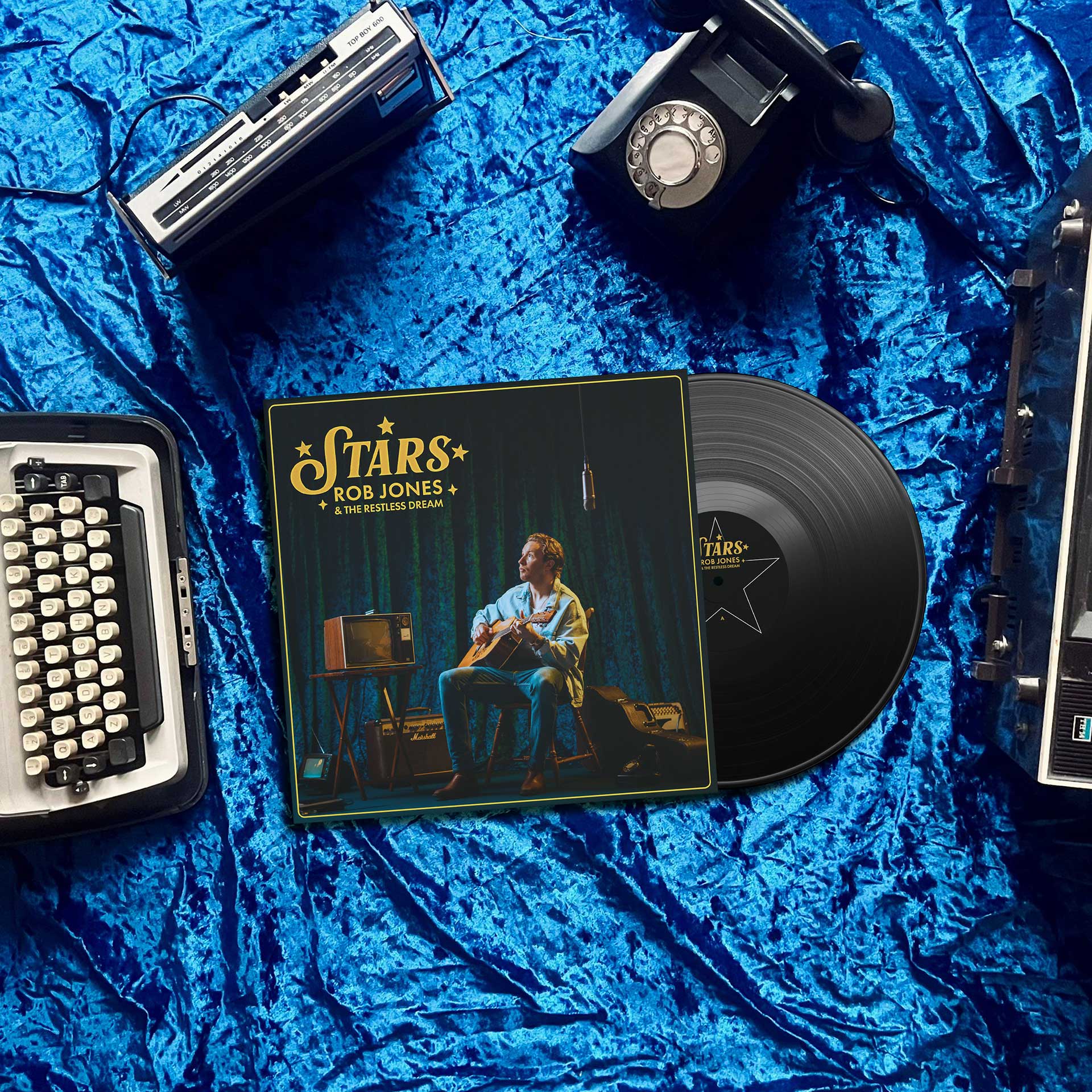
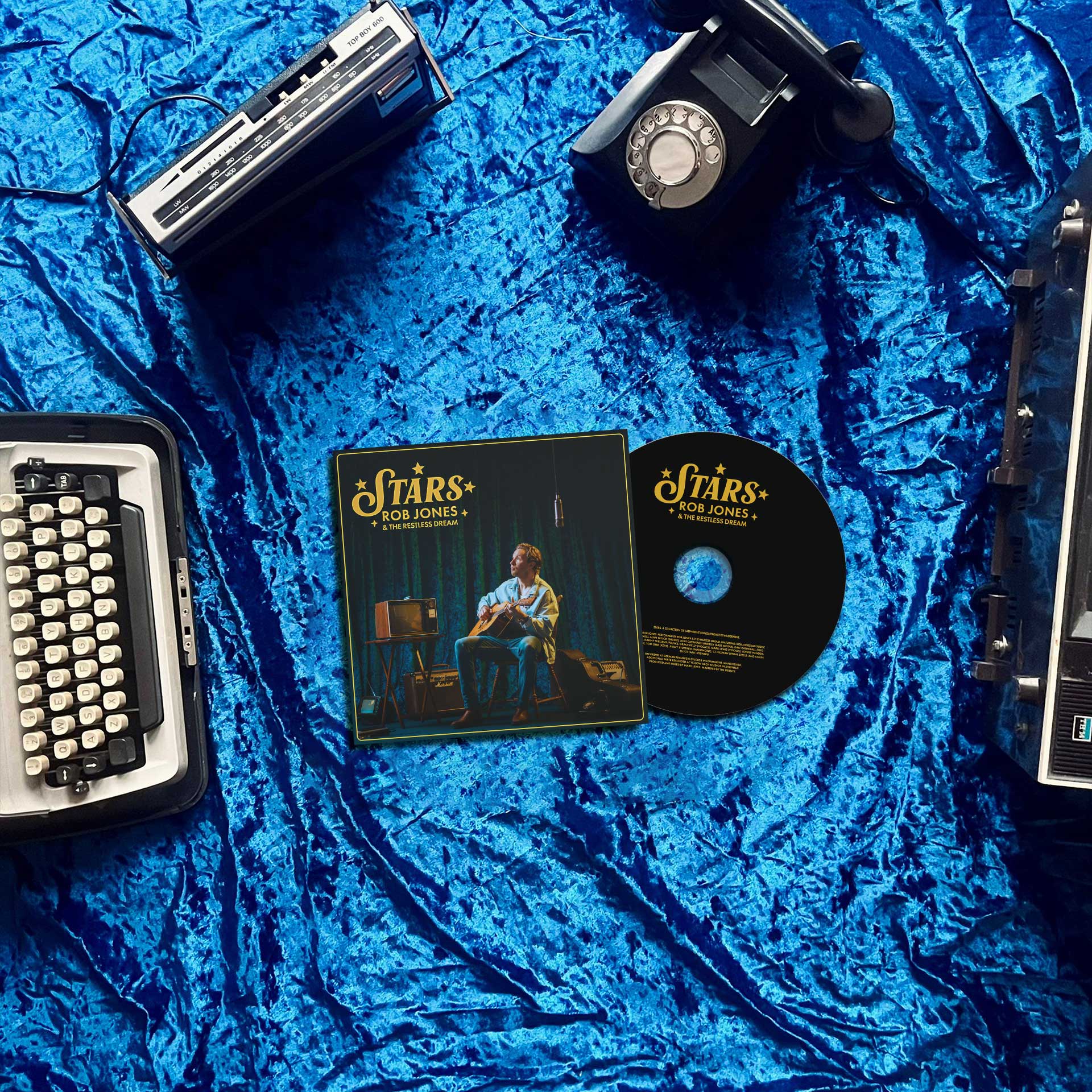
Available to buy on limited edition first run vinyl and CD