drums, organs, pianos,
harmonies that felt like
ghosts in the room.
The One About Mysticism (and My Dad) 👁️
We were born before the wind
Also, younger than the sun
'Ere the bonnie boat was won
As we sailed into the mystic
So says Van Morrison.
A couple of months ago my dad and I recorded a bit of a conversation, podcast-style; I’ve been posting clips of it across social media as a way of helping me tell the story of STARS and its singles.
He said something interesting that we caught on camera:
“The kids who are making it these days in music...”
(and I’m certainly flattered to be grouped in with 'the kids' now that I’m about to enter the second half of my thirties)
“...are writing about real things; real people; real relationships.”
My dad thinks my songs are impenetrable, that you “need a degree in English literature” to get anything out of them.
He might be right.
But, like Van Morrison, I like music to be mystical.
Especially pop music.
Pop music inhabits a sort of liminal zone, a bit like cinema or television, where very special people can straddle the boundary between high art and mass appeal.
Where they can make you dance, or sing, or cry, and flood you with endorphins, whilst reflecting on god, love and death.
I suppose it all started with Bob Dylan and The Beatles. They got very mystical all of a sudden in the mid-sixties, inspired by drugs, the Beat poets, and Eastern spirituality.
Paul Simon: he can be mystical too.
Sure, he can also be quiet and quaint in that literate, New England sort of way.
But like any great poet, it’s the way he takes the human and brings it into fleeting contact with the sublime that makes his writing unforgettable.
One and one-half wandering Jews
Free to wander wherever they choose
Are traveling together
In the Sangre de Christo
The Blood of Christ Mountains of New Mexico
On the last leg of a journey
They started a long time ago
The arc of a love affair
Rainbows in the high desert air
Mountain passes
Slipping into stones
Hearts and bones
It’s the economy of language that kills me.
‘The arc of a love affair’ is a phrase so subtle, set there amongst all that glittering imagery — the one-and-a-half Jews, the mountains, the desert, and the Blood of Christ — that you might almost miss it.
But it not only reminds us, in a fairly devastating way, how all love affairs that begin must inevitably end; it simultaneously speaks to something more sacred and divine — something covenantal.
It's a brief glimmer of the Book of Exodus in a song about a road trip he took with Carrie Fisher - Princess Leia to you and me.
Could anything be any cooler?
Even Bruce Springsteen, the blue-collar boss, gets mystical.
Have you ever heard The Rising?
Obviously, we all remember the line “Come on up for the rising” and the catchy bit that goes “La la la la la la la la,” but what about:
I see you Mary in the garden
In the garden of a thousand sighs
There's holy pictures of our children
Dancing in a sky filled with light
May I feel your arms around me
May I feel your blood mix with mine
A dream of life comes to me
Like a catfish dancing on the end of my line
I doubt you'd hear that on a construction site in New Jersey.
Or maybe you would, just expressed differently.
Because one of my favourite things about art is that it can give us a glimpse of those ineffable experiences we all have from time to time; the ones that we know and understand but that everyday language just can't do justice to.
The Ancient Greeks knew how important those were, and they also knew that art, storytelling, drama and music were the only ways to communicate them.
They knew the difference between mythos and logos and how a healthy society needed both.
Because precision and rationality are useful; they help us navigate and define the confusing world we find ourselves in.
But myth — stories, art and songs — are the concentrated collective dreams of a culture. They contain truths rich beyond words, difficult to express, and they do just as much to make the world around us understandable as any textbook or research paper does.
Ian McGilchrist’s The Master and His Emissary makes exactly this point.
A neuroscientist with a background in philosophy and the humanities, McGilchrist’s big idea is that the two halves of our brain see the world in radically different ways.
The right hemisphere takes in the world as something living, complex, and interconnected. It’s attuned to context, tone, and metaphor — the kind of knowing you get from music, story, or lived experience. It sees things as part of a whole.
It’s mystical.
The left hemisphere, by contrast, deals in rationality and control. It’s brilliant at building machines and arguments, at defining, systematizing, experimenting, and recording. It seeks to reduce the complexity of our experience into what can be measured and analyzed.
McGilchrist argues that, in today's technological world, the left hemisphere, once a servant — or emissary — to the right, has become its master.
Modern life prizes analysis over intuition, measurement over meaning. We’ve gained precision but lost perspective.
His remedy isn’t to reject reason altogether, but to restore balance: to let the right hemisphere — the real master — go back to guiding the left in service of something greater.
In short, he says:
The world isn’t a problem to be solved but a mystery to be understood.
That’s what I like art to be like.
A mystery to be understood.
It's why I love the transcendental poetry of John Donne, or the surrealist art of Salvador Dahli.
It's why I get nothing from the Arctic Monkeys or Lily Allen or Ed Sheeran.
I don’t like things to be “relatable.”
I suppose I’m telling you all this to set your expectations a little.
On Friday, the last single from STARS goes live.
It’s a strange, dreamy kind of tune called St. Maria.
To quote my dad again, from the same conversation I mentioned earlier:
“Who’s St. Maria?”
It turns out she is someone — though I can’t claim to have known that at the time of writing.
I’ll share that story with you on Friday once it's out.
I hope you enjoy the tune.
Keep dreaming,
Rob
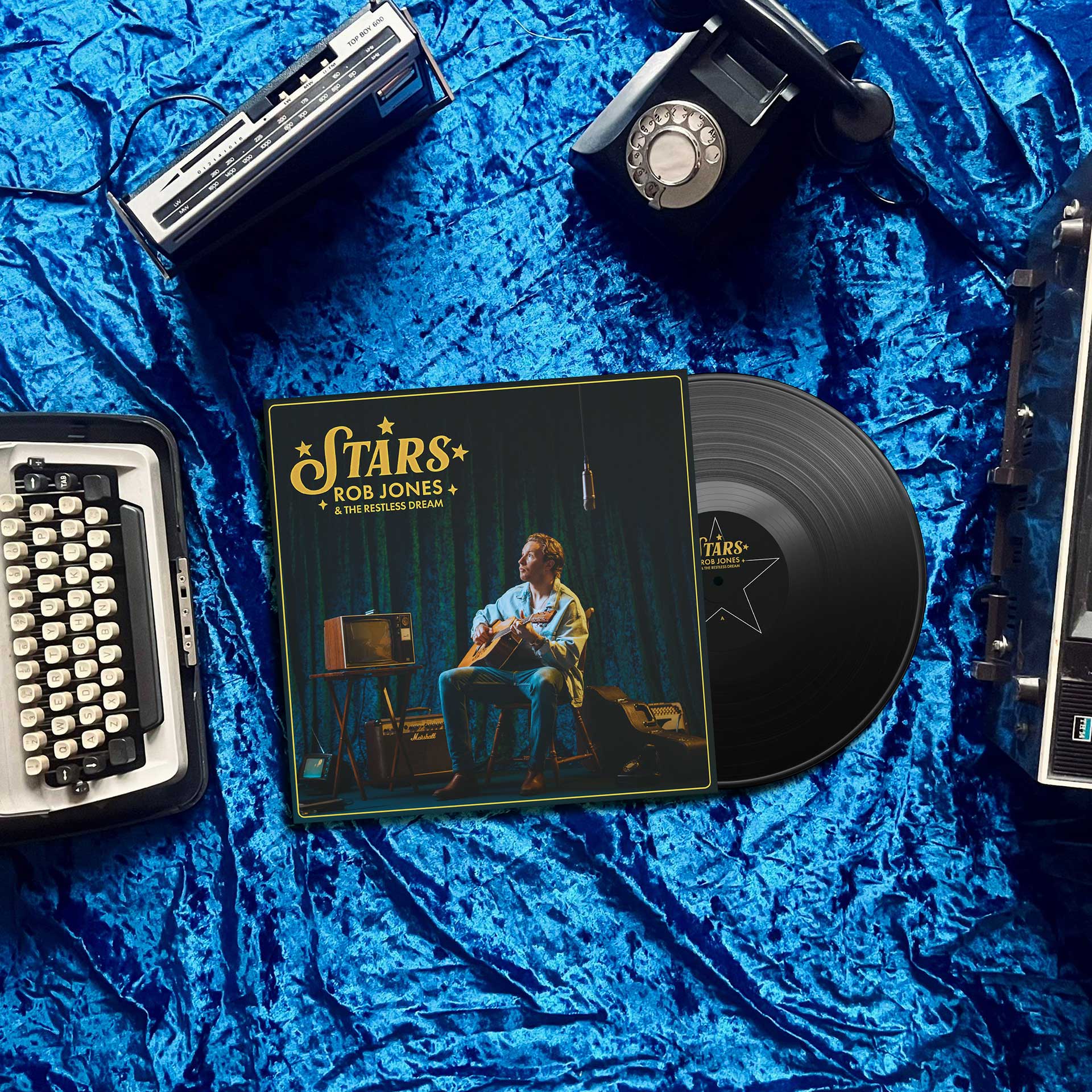
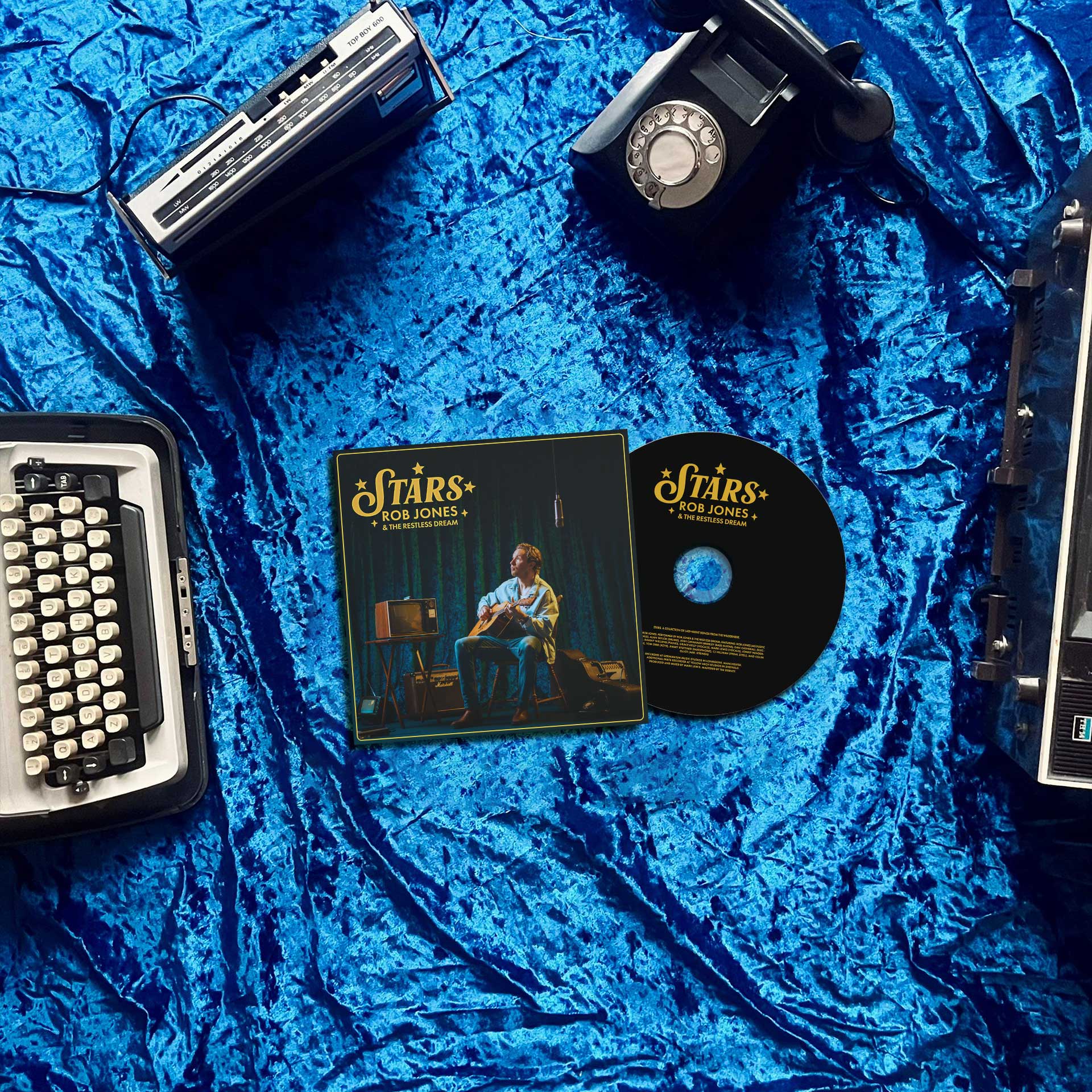
Available to buy on limited edition first run vinyl and CD