drums, organs, pianos,
harmonies that felt like
ghosts in the room.
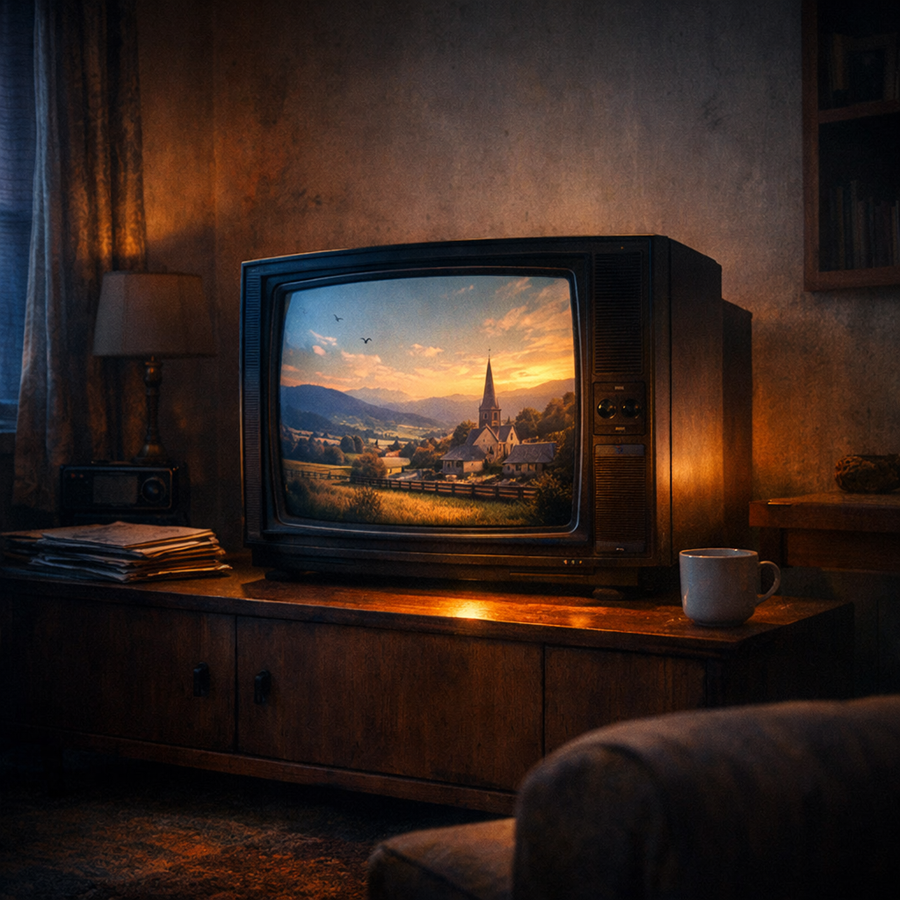
Why we miss things that were never ours...
Into my heart an air that kills
From yon far country blows:
What are those blue remembered hills,
What spires, what farms are those?
That is the land of lost content,
I see it shining plain,
The happy highways where I went
And cannot come again.
The power of A E Housman’s poetry lies in its simplicity.
These famous lines are from his 1896 collection A Shropshire Lad.
For my international readers, Shropshire is a picture-postcard of a county in England - gentle hills, mossy stone walls, honeysuckle, birdsong, and long summer nights.
The sort of English countryside Vera Lynn might sing about.
Housman uses it as a sort of living theatre to explore the themes that made him great - pain, age, loneliness, a past that can’t be repossessed.
A shining land of lost content.
It’s the poetry of nostalgia.
But nostalgia isn’t just about remembering things.
It has that bittersweet edge - revealed when you splice it up into its Greek constituents: homecoming (nostos), pain (algos).
It’s a brief, transitory return to something precious we know is gone.
A glimpse of the happy highways that we’ll never walk again.
Housman’s blue remembered hills - the idyllic melancholy of a bucolic, untouched Shropshire - seem to capture the geography of nostalgia perfectly.
Except the thing about A E Housman is that he wasn’t even from Shropshire.
He was from Worcestershire - the unpronounceable home of Worcestershire sauce, British porcelain and my mum.
In the English Midlands - the country's industrial heartland.
In fact, when he began writing the poems of A Shropshire Lad, he’d never even been to Shropshire.
He had to lift most of the places and names from a guidebook.
And I think this tells us something interesting about nostalgia.
It isn’t necessarily contingent on truth.
Or at least not on truth in the plain, factual sense.
Generating nostalgia is an art form.
I could ask ChatGPT to give me a detailed description of life in post-industrial Manchester.
It might be perfectly accurate and historically sound.
But it wouldn’t make me feel anything.
Look at a painting by L S Lowry though, and - despite the impressionistic strangeness of the matchstalk men and women, the thin, spidery bridges, the tight spirals of chimney smoke - you feel like the place has come alive for you somehow.
That you suddenly understand it in a way you couldn’t before.
That’s what great artists do.
They’re able to take their subject matter and transpose it into a place of unreality.
And, in doing so, they communicate its essence with more intensity than an encyclopaedia or a photograph ever could.
Lowry’s paintings are more Manchester than Manchester.
Just as Stranger Things is more 80s than the 80s, and Derry Girls is more 90s than the 90s.
Because nostalgia isn’t just about memory.
It’s memory aestheticised.
Memory edited, lit properly, and set to music.
And you don’t need to have been there, seen it, or done it to feel its seductive power.
That sense of something beautiful, half-lost, half-invented.
Which might also explain why it has become such a powerful force in modern life.
Let’s face it - nostalgia doesn’t just sell paintings.
It generates Netflix subscriptions.
It fills theme parks.
Without wanting to be political - I’m far too awkwardly British for that - it even empowers governments.
I sometimes feel as though I’m living in a kind of nostalgia machine.
So much of the modern media landscape feels geared towards generating it.
Step into the cinema on opening weekend of the latest Star Wars reboot and you can feel how the air is thick with nostalgia.
I feel it when I wander through the chic thrift shops and cafes in Manchester’s Northern Quarter; when I stumble across an independent comic book store or a Sabrina Carpenter music video.
The odd thing, though, is that, like Housman, much of what we feel nostalgic for was never really ours in the first place.
My generation wasn’t around for the 60s, 70s or 80s.
Even the 90s are a kind of sugar-pink blur of childhood memories.
But that doesn’t stop us filtering and repackaging our own lives as strange nostalgic time-pieces.
Paying homage to the past as if we belong there.
We put on entire aesthetics made out of borrowed memories.
We buy vinyl players, and retro football shirts, and use vintage fonts and editing apps that make our photos look as though they were taken on Polaroid cameras.
Look at me.
I have my own 21st-century thoughts and feelings, but the way I instinctively want to express them is in the familiar sounds of a century now dead.
I suppose part of this is a lack of ability - it takes people of rare genius to do things that are genuinely and strikingly new.
But part of me wonders if it isn’t also a reaction to the world we find ourselves in.
Maybe modern life is changing so quickly these days that we’re all just looking for something familiar to cling on to.
Even if it was never really familiar to us in the first place.
And our collective imaginings of the past - that shining land of lost content - offer that.
Not because they are true, exactly.
Not because that past ever really existed in the form we imagine it now.
But because art, memory and longing have conspired to make it feel like home.
That may be the strangest thing about nostalgia.
It doesn’t have to tell the truth in order to tell us something true.
And maybe that truth is that we all feel a little culturally disorientated.
Housman’s Shropshire was never really Shropshire.
Lowry’s Manchester was never just Manchester.
And yet both artists fill us with that same piercing feeling.
That same homesickness for a place half real, half imagined.
A past we never knew, but still find ourselves longing for.
Perhaps that is why nostalgia remains so seductive.
It promises us not just a past, but a past made bearable.
Set to music.
A past arranged into meaning, in a present so full of confusion.
Keep dreaming,
Rob
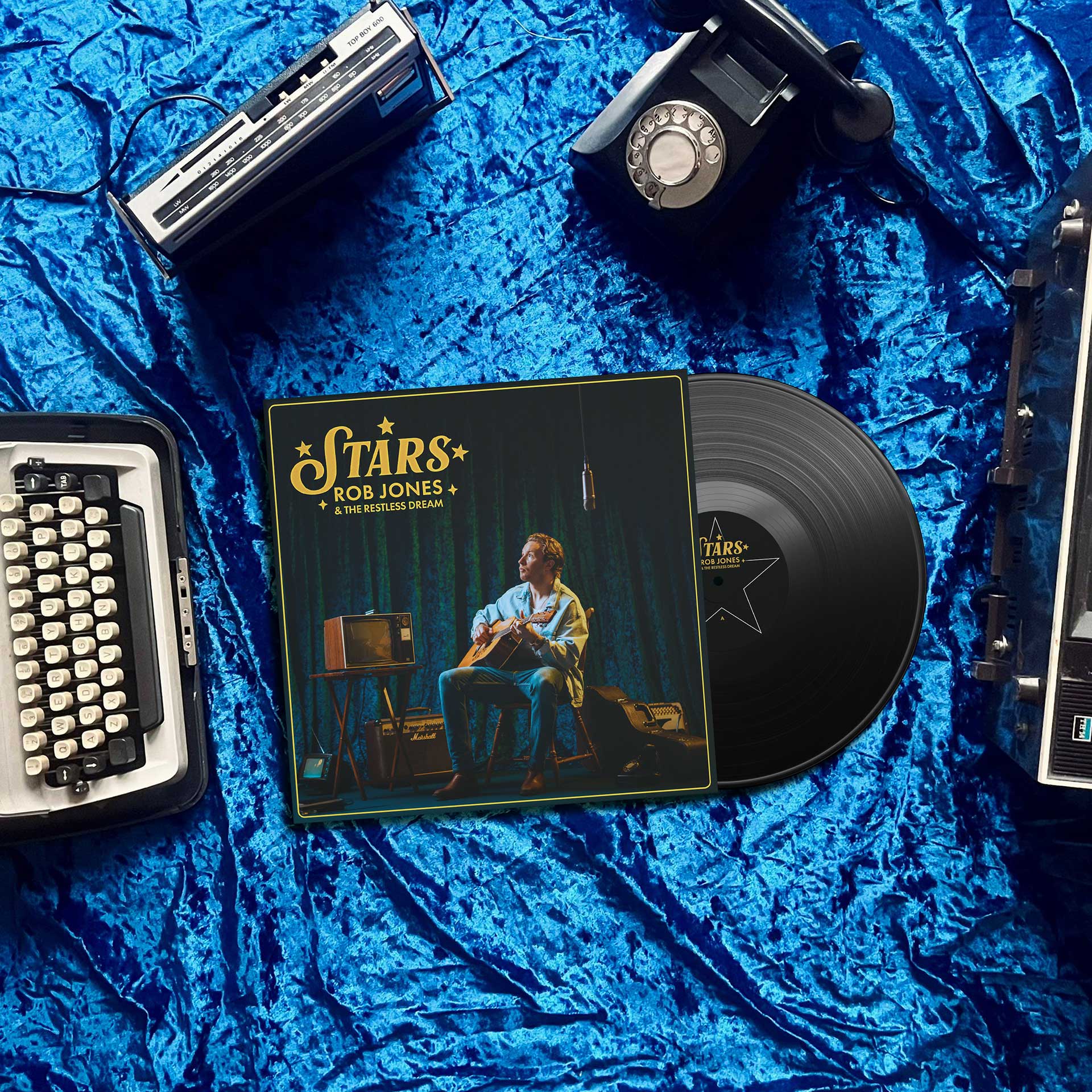
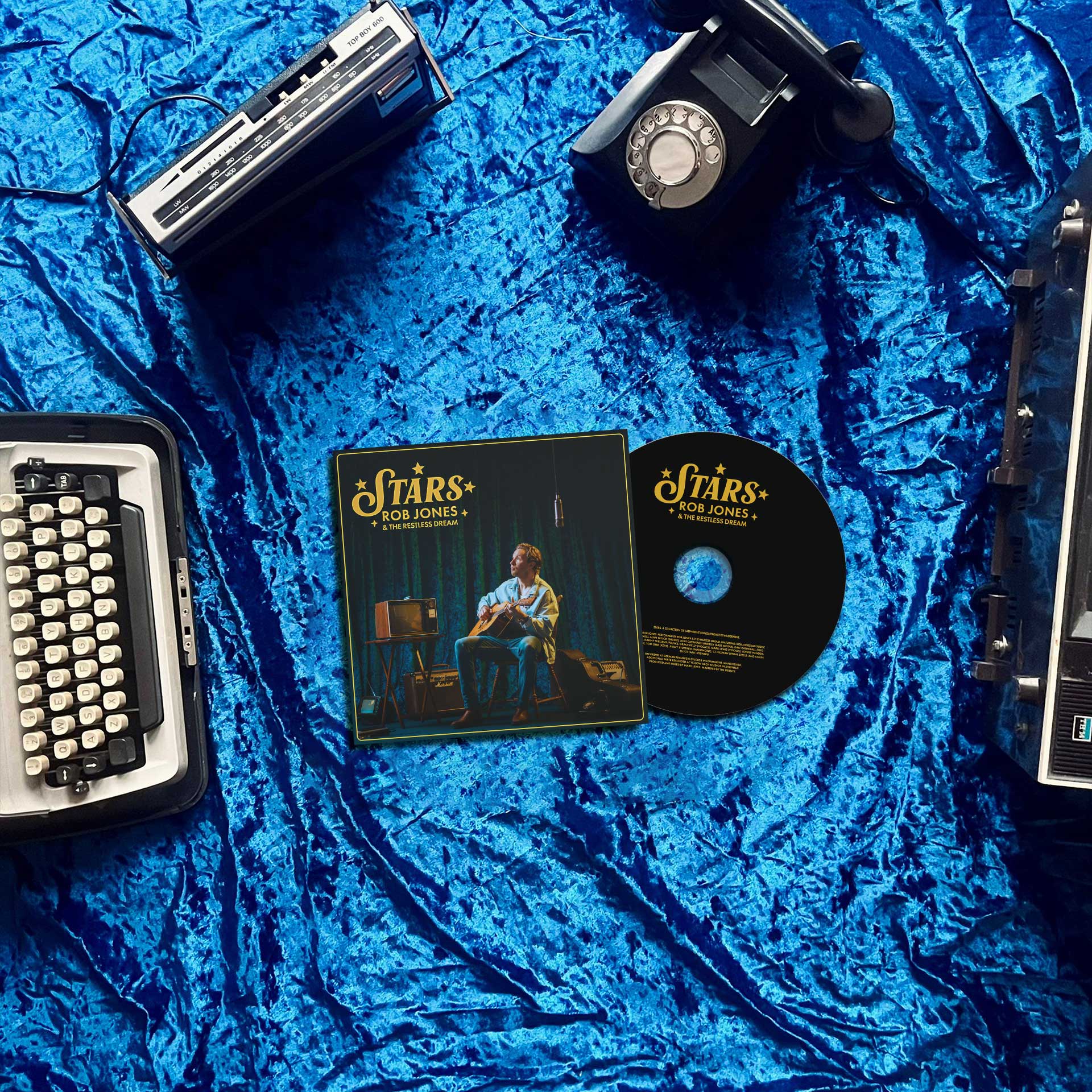
Available to buy on limited edition first run vinyl and CD