drums, organs, pianos,
harmonies that felt like
ghosts in the room.
Why I'd torch musical history...
Ray Bradbury’s novel Fahrenheit 451 is so titled because 451 degrees Fahrenheit is the temperature at which books burn.
Its central character, Montag, is a fireman.
But, in Bradbury’s novel, firemen don’t exist to extinguish fires.
They’re there to incinerate problematic cultural materials.
Books.
The repositories of dangerous ideas, reflections of the human soul deemed too threatening to a totalitarian society that feeds on human soullessness.
I’d like to propose something similar in 2026.
I’d like to ban music.
I can’t burn it because so little of it is substrate dependent now.
I don’t know what the burning point of vinyl is but I don’t really have an issue with vinyl anyway.
(Mostly because I can sell it myself…)
You can’t really burn digital files.
I’ve thought about infiltrating Spotify’s data centers like some masked pyrotechnic vigilante, armed with a balaclava and a petrol can, but it turns out they don’t even have any now.
Google manages all of Spotify’s data — and I wouldn’t want to mess with them.
Now don’t get me wrong — I’m not seeking to impose some sort of censorial dictate.
Though, to be honest, there are certain tunes I think should probably be made illegal on ethical grounds.
Nobody needs to hear Stargazing by Myles Smith again.
Under any circumstances.
It just struck me recently whilst I was eating a cheeseburger in a pub in Derbyshire that something has gone seriously wrong with our relationship to music.
As I was tucking in, I found myself suddenly drawn to the song playing quietly through the speaker on a nearby wall.
It was Fisherman’s Blues by The Waterboys.
Now, you might be a fan of The Waterboys, or you might not. (Though, honestly, you should be.)
But regardless, Fisherman’s Blues needs to be thought about as a piece of work.
It’s a song born of an artistic collapse, as the band struggled to come to terms with the success of their most famous hit, the sublime The Whole of the Moon.
Mike Scott, turning away from the sheer scope and majesty of that sound, immersed himself in folk music and spent time playing around Ireland and Scotland, searching for a new, more honest, earthier sound he could better bring to life on stage.
The resulting album, also called Fisherman’s Blues, is a folk-rock masterpiece that includes Van Morrison covers, snippets of Woody Guthrie and even a W. B. Yeats poem set to music.
It’s also the sound of an artist rediscovering his roots and channelling the past.
Check out the second verse:
I wish I was the brakeman
On a hurtling fevered train
Crashing headlong into the heartland
Like a cannon in the rain
With the beating of the sleepers
And the burning of the coal
Counting the towns flashing by
And a night that's full of soul
With light in my head
With you in my arms
It’s like biblical poetry.
Sitting there in a pub in Derbyshire eating a cheeseburger, hearing it leak quietly across the room from a tiny wall-mounted speaker, I felt a bit ashamed.
Recently, my girlfriend appeared in a stage version of Jane Austen’s Pride and Prejudice.
I was struck by how often scenes revolved around some nervous debutante in curls being made to play the piano for the entertainment of the drawing room party.
Then I realised that this wasn’t just to demonstrate the talents of young unmarried daughters to potential suitors.
This was also the only way you ever got to hear music in your house in the early 1800s.
Sure, you could take a horse and cart to your nearest provincial market town and there might be a concert once every seven years.
Or you could listen to the drunkards in the local inn.
Or the congregation on a Sunday.
But those were pretty much your options.
Music used to be a scarce commodity.
And that scarcity gave listening a sense of occasion.
It strikes me now (and, of course, I’m biased) that music has never been less valuable.
The debit sheet is a disaster.
For me to release a song in 2026 it takes thousands of pounds, tens of hours and a group of individuals with a wealth of talent, honed over years of developing their craft — musicians, producers, mixing engineers, mastering engineers, graphic designers, videographers.
The listener is able to listen to the song as many times as they like for nothing.
It’s no wonder I can’t get a mortgage.
It’s utter financial madness.
Now I’m not asking for any tiny violins.
I love making music, and would do it for free.
(Which is lucky because, as discussed, I am.)
I’m also in no position to complain.
I’ve chosen to play this impossible game.
I do think there is something warped about our relationship to music, though.
When did we decide, as a culture, that it needed to be everywhere, all the time?
We don’t do that with other forms of art.
People don’t perform avant-garde theatre in the gym, so that you have something to look at in between sets.
I’ve never seen a live sculptor chiselling away at a block of marble in the corner of a wine bar.
I don’t have a mime artist sitting next to me on long drives, pretending to be stuck in a box (mime artists need to broaden their repertoire in the public consciousness).
But music is completely inescapable.
Every hotel lobby, every restaurant, every supermarket — pretty much every public space seems to have decided that the experience of being there is somehow incomplete without it.
Perhaps it’s some reflection of our inability to cope with silence — terrified of having to engage with our own thoughts for more than four seconds at a time.
As such, it’s become so ubiquitous that I think we’ve lost all sense of what it is.
We haven’t lost our love of music.
We’ve lost the distinction between listening to music and merely being somewhere that music is happening.
And I think that the art form lowers itself to meet the demands of mass proliferation.
Look what the advent of cable television did to scripted drama.
Sure, you occasionally get The Sopranos.
But you also get an absolute deluge of forgettable trash.
And I don’t want to be that guy… but have you heard the Spotify Global Top 100?
(I mean — I haven’t either — but I assume it’s awful).
Now please don’t mistake me — I’m not claiming to be some tragically overlooked genius.
But we are on the precipice of an absolute tsunami here.
If mainstream pop was forgettable before, just wait until generative AI can write super-palatable pop songs that are release-ready in seconds.
(And then stop waiting, because they pretty much already can).
I think we’ve got to fundamentally readdress how we view music and what we think it’s there for.
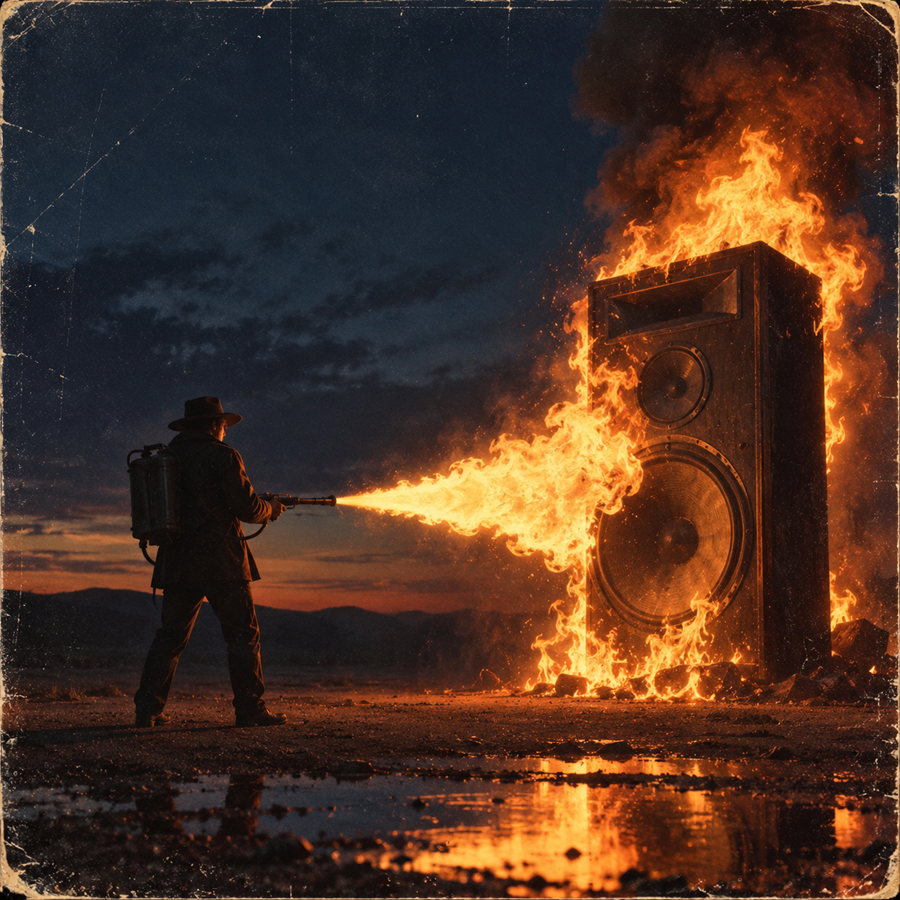
I think we’ve got to get the flamethrowers out.
If you hear A Change Is Gonna Come by Sam Cooke in a Tesco Express, burn it down.
If anyone ever tries to play you a track from Blonde On Blonde streamed at a low bitrate through an Amazon Echo speaker, set their entire house and all of their belongings on fire.
And, for the love of God, if someone holds their phone up to your ear and tries to make you listen to literally anything… unleash hell.
Fight the good fight.
And in the meantime,
Keep dreaming.
Rob
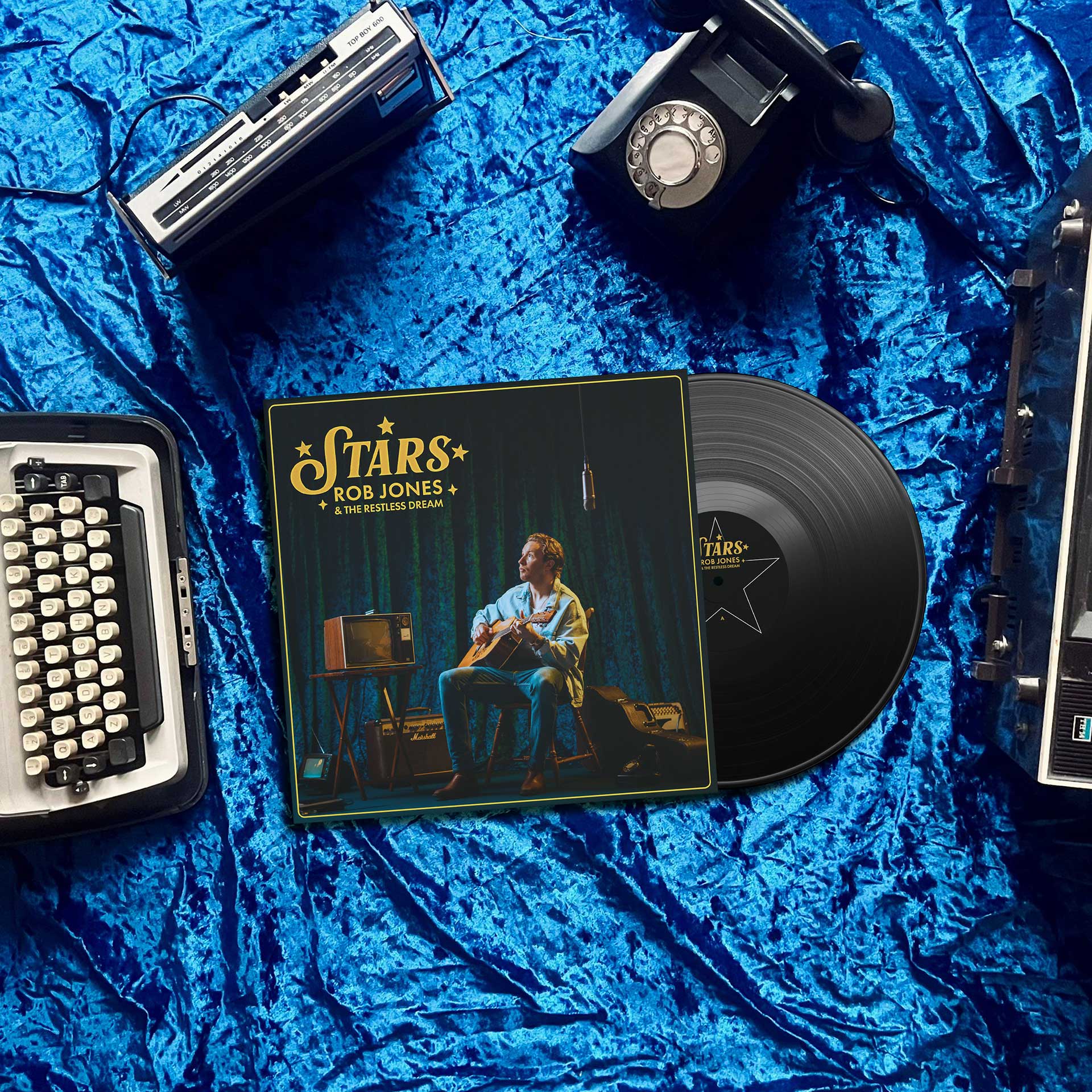
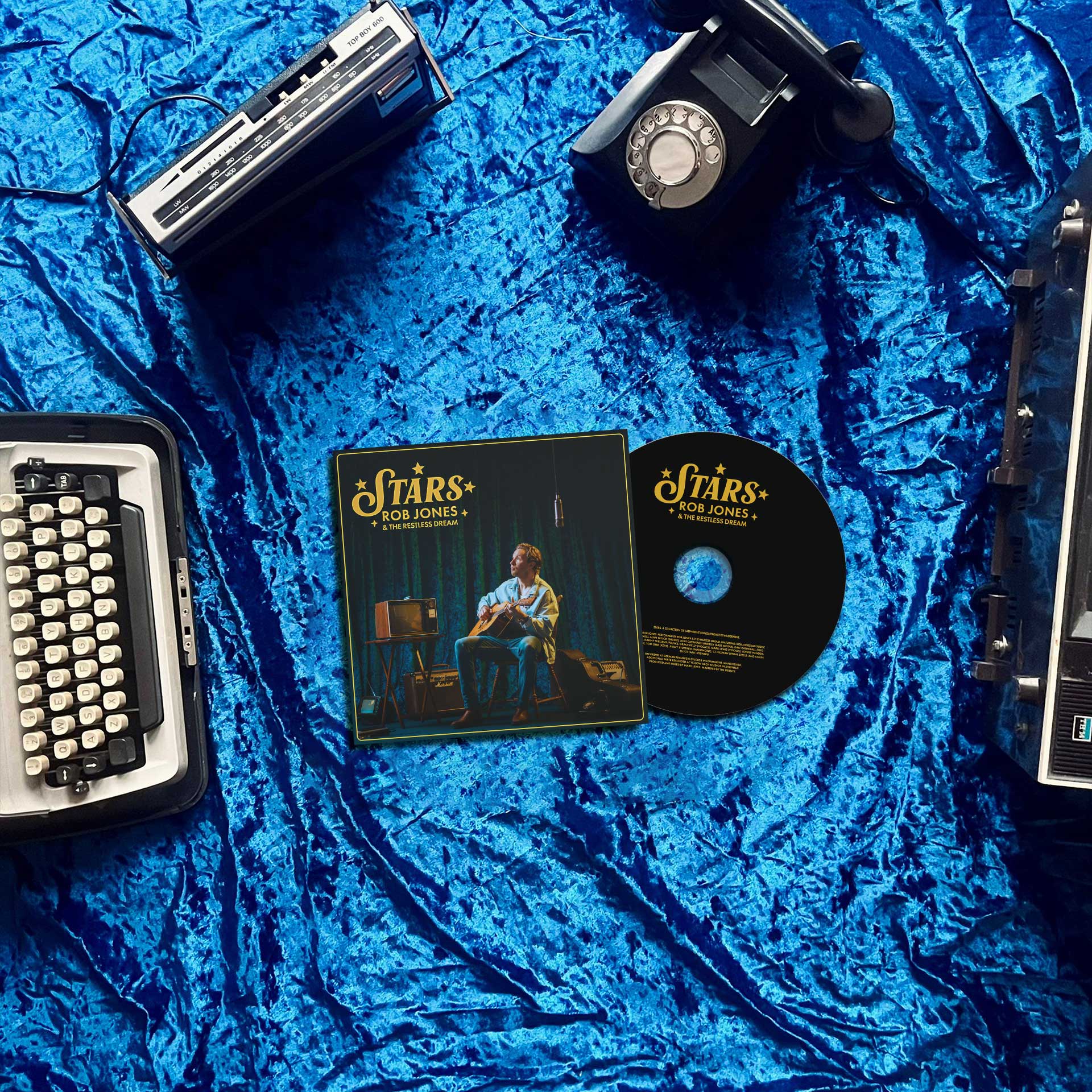
Available to buy on limited edition first run vinyl and CD