drums, organs, pianos,
harmonies that felt like
ghosts in the room.
On Bob Dylan, Jake Paul and being post-culture...
What is 'postmodernism'?
It’s a word I was first exposed to at university, a time in my life when I was mostly studying English literature and drinking a lot.
It’s still a slippery term—you can tell that by the way it defines itself by what it isn’t.
It isn’t modernism. It’s post-that.
So what’s modernism then?
Modernism was a way to describe early 20th-century art—visual art, film, poetry, drama—that tried to dig into the human condition and make sense of the brave new industrial world we were living in.
Think Pablo Picasso's strange cubist portraits or the unreadable novels of James Joyce.
It was all about experimenting with new forms and ideas; creating new art to match our new ways of living in a technological world. Trying to find new vehicles for old truths—about alienation, the cost of progress, how societies should function, sex, loneliness.
All the good stuff.
Fast forward through two world wars, a couple of nuclear bombs, and some ideological mass murder in Russia and China, and high-minded modernism had given way to a pervasive sense that all that seeking had led us… nowhere.
Or worse - had almost destroyed us.
That history, ideology, culture—it was all a bit of a sham.
And that's postmodernism in a nutshell.
The idea that maybe there aren't any grand universal truths after all.
That the world is whatever you feel like portraying it as.
It’s the Marvel Cinematic Universe of cultural philosophy.
Infinite realities blur into one another; Norse gods fight aliens from other dimensions; Iron Man dies one summer and reappears the next.
There are constant sly winks to the audience, and Stan Lee cameos as the janitor just to remind you that you're in an air-conditioned cinema, and that none of it is meant to be taken too seriously.
Postmodernism questions the idea that anything really means anything, or that it ever did.
And I’m not totally anti-postmodernism.
It’s liberating—right?
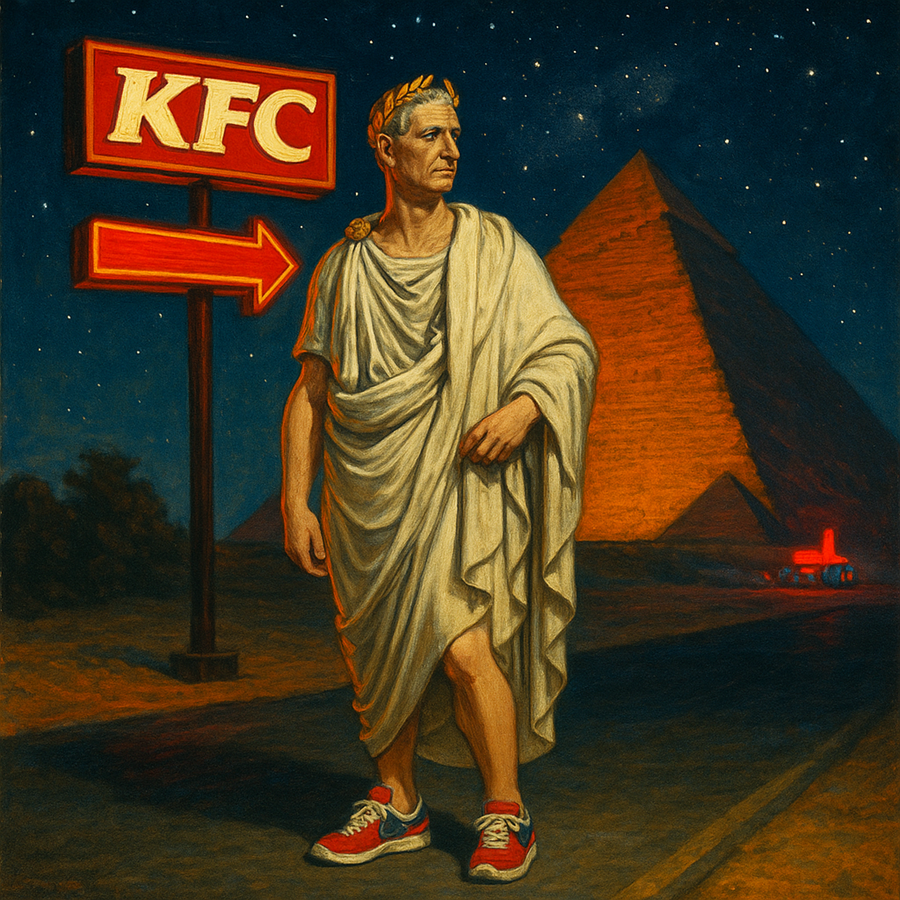
The idea that you can see Julius Caesar’s head on a tin of dog-food, or eat KFC next to the Great Pyramid of Giza.
That all those hallowed institutions and revered ideas of the past are up for grabs.
That they can be reimagined, remixed, juxtaposed.
That you can choose the ending of the video game you’re playing—or the latest interactive episode of Black Mirror—because neither of them were trying to tell you anything significant anyway.
After all, there's nothing to tell.
We’re a tiny speck of dust floating through infinite nothing.
Potentially one infinite version of an infinity of infinite nothings, if you believe some physicists.
And, anyway, Bob Dylan was doing postmodernism before it was even cool.
Have a listen to Desolation Row:
All except for Cain and Abel
And the hunchback of Notre Dame
Everybody is making love
Or else expecting rain
And the Good Samaritan
He's dressing
He's getting ready
For the show
He's going
To the carnival tonight
On Desolation Row
Dylan transports a star-studded cast of cultural icons—from Einstein to Cinderella, from the heroes of the Old Testament to Robin Hood—and shuffles them through an imaginary dead-end street where nothing seems to matter; an ironic, liminal space where none of them mean anything any more.
My worry is that Dylan was telling us something real about what happens when we take our cultural icons and strip them of all that meaning.
We end up on Desolation Row.
And I think he was being pretty prescient about it.
Take boxing.
Like it or not, boxing is one of the most human of pastimes.
Men face each other in martial combat in ancient Sumerian carvings from around 3000 BC.
You can trace its cultural lineage through the Olympics of Ancient Greece, the coliseums of Rome, the Marquess of Queensberry’s rules, to Muhammad Ali and the Rumble in the Jungle.
And yet last year, we watched the most-streamed event in sports history unfold as a 58-year-old Mike Tyson staggered, visibly exhausted, around YouTuber Jake Paul while the crowd booed.
Another cultural icon, transported to a strange dead-space, stripped of all his meaning.
Sixty-five million people tuned in to watch almost precisely nothing happen.
It was a truly soulless spectacle, maybe too soulless, even for Desolation Row.
I'm a little worried that we may have moved past post-modernism into some sort of plastic, post-cultural world.
I got the same uncanny feeling watching Soccer Aid the other day, as Carlos Tevez received a pass, turned, ghosted by Mancunian Twitch streamer Angry Ginge, and slipped the ball past Paddy McGuinness.
It just made me feel strangely empty.
It was just another example of signal without substance; entertainment for entertainment's sake.
Another diversion for the eyes that teaches us nothing, makes us feel nothing, says nothing to us about anything.
It’s like the German rap-dance routine about Barbara’s rhubarb shop that racked up 47 million views on Tik Tok.
Or YouTube unboxing videos; or Elon Musk’s Dogecoin; or an AI-generated video trailer for Harry Potter reimagined as a ’90s sitcom.
It’s Mr Beast's real-life Squid Games.
Because if postmodernism plays with the idea of meaning, much of what I encounter now seems to bypass it entirely.
It's like meaning was never meant to be part of the product.
I know this sounds a bit like cultural nihilism.
And maybe there’s a touch of glasshouse hypocrisy here too—I am, after all, a guy from Manchester trying to reframe the story of his own life via the power of trans-Atlantic, retro-sounding music.
But I often find myself hungry for meaning these days.
Re-reading Victorian novels. Re-listening to Paul Simon records. Re-watching Casablanca.
Trying to re-discover something.
Anyway—I’d better get back to writing Americana songs about how I’m trying to piece together my fragmented identity.
I need to post one of them on Instagram later, alongside a video I had artfully made of me walking into a derelict phone box.
Then I’m going on a self-consciously ironic bowling date with a girl I met swiping on the internet.
Postmodernist?
Me?
Keep dreaming.
Rob
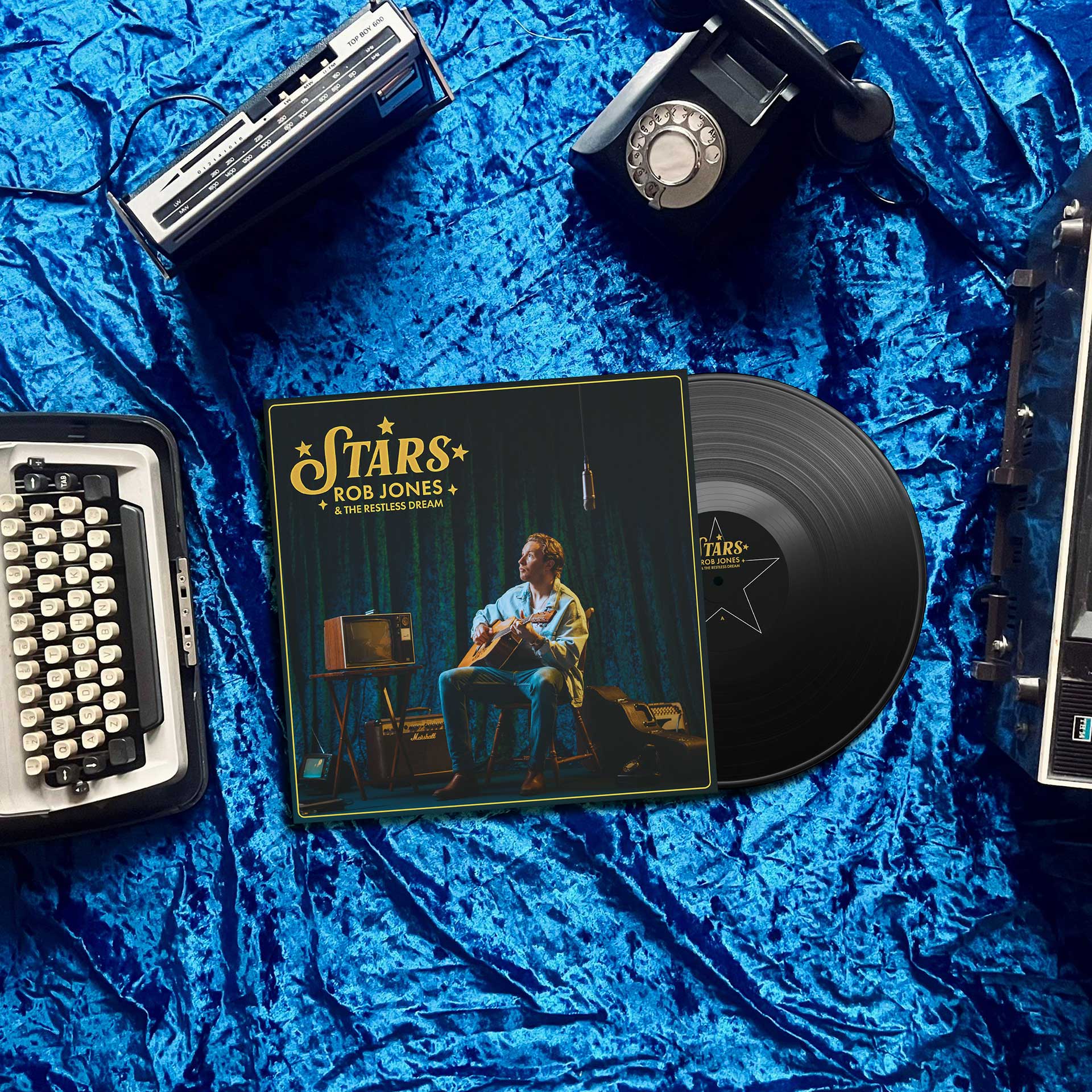
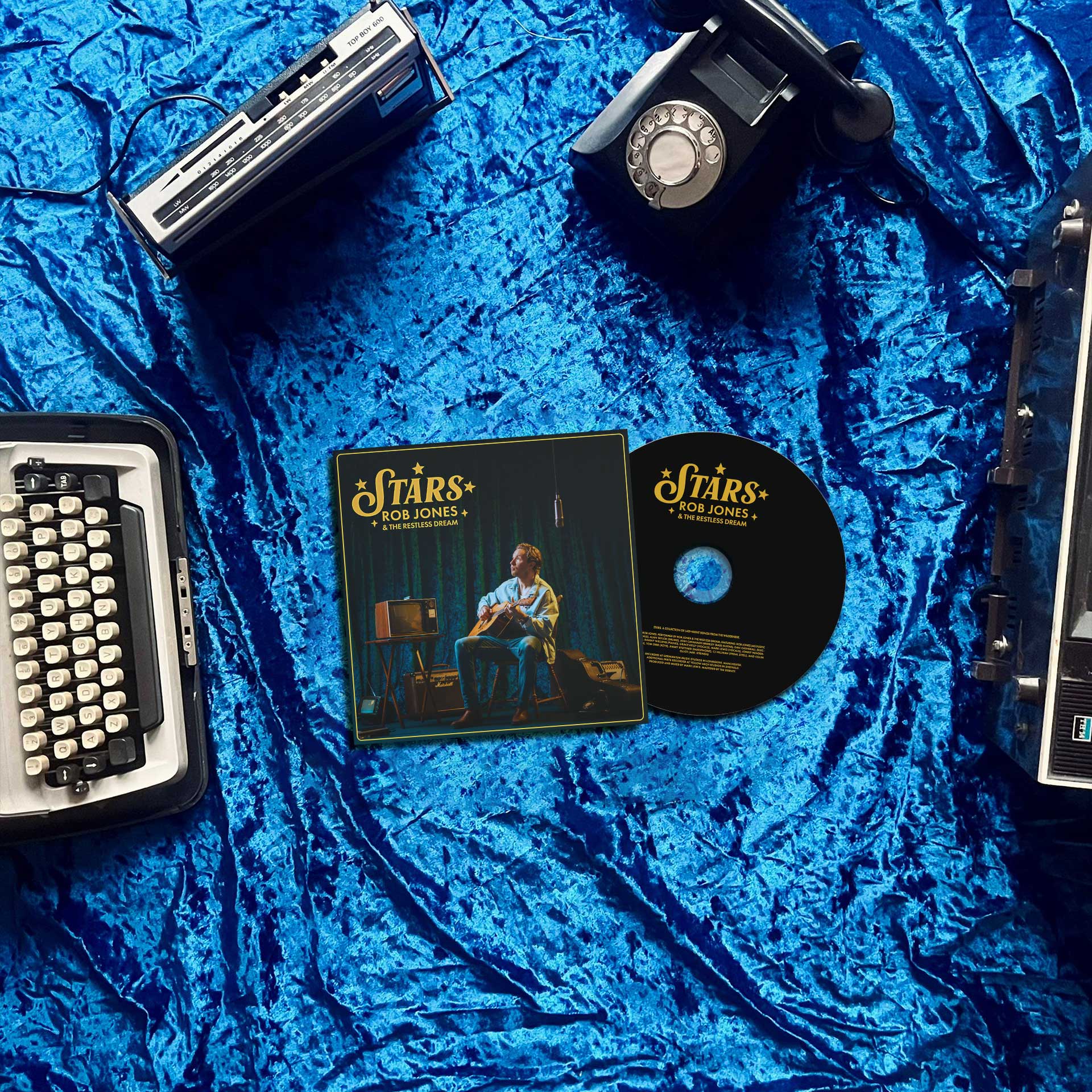
Available to buy on limited edition first run vinyl and CD